

Work Pattern Right

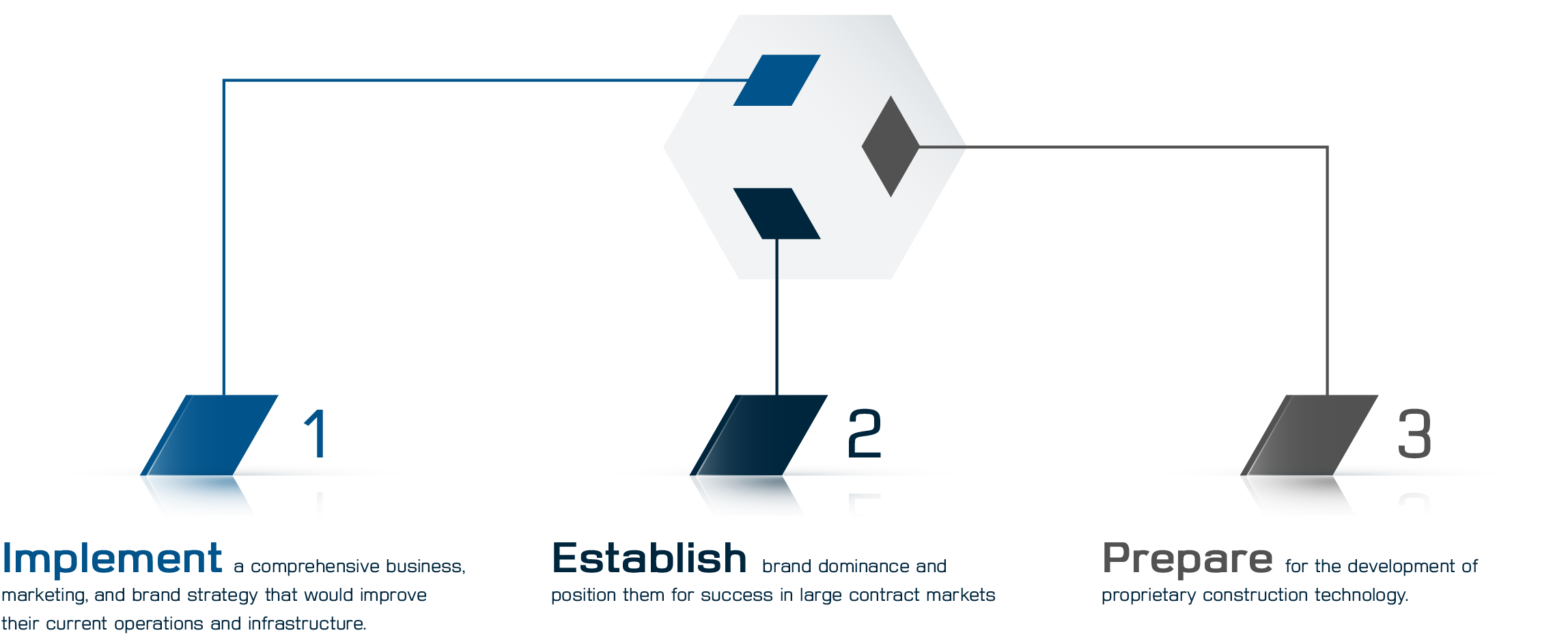
Unimech recruited Jug to create and implement a comprehensive business, marketing, and brand strategy that would improve their current operations and infrastructure, establish brand dominance, position them for success in large contract markets, and lead the development of a proprietary construction technology.

Roles:

Manager of Marketing, Communications & Technology | Graphic Designer | Director of UI/UX/PX | Product Designer

Team:

Varied, largest team was 8 (during operational tenure)

Work Pattern Left

THE CLIENT

Unimech was a prime mechanical contractor who had been serving Calgary and the surrounding area for over 15 years. Their specialty was connecting resources to deliver the most efficient, sustainable, and comfortable environments possible. Their goal was to continually master, innovate, and optimize the construction process from start to finish.

THE PROLOGUE

Jug was drawn to this project because it offered the unique opportunity to innovate Unimech’s brand, infrastructure, and technology in a traditional industry by applying modern UX and PX practices; while partnering with them to create a proprietary product.
Unimech’s goal of positive disruption was ideal for Jug’s provoking mindset; the magnitude of their problems required his proportionate skill set; and the chance to create a technology that would benefit an essential industry was genuinely inspiring.

THE PROBLEM

Unimech suffered from a crisis of identity, fractured infrastructure, incoherent communications and data, and many other issues they knew existed at virtually every level of their organization. They needed Jug’s expertise to quantify, analyze, and solve these issues to be capable of entering the next market tier, and for any future initiatives.

THE OBJECTIVE

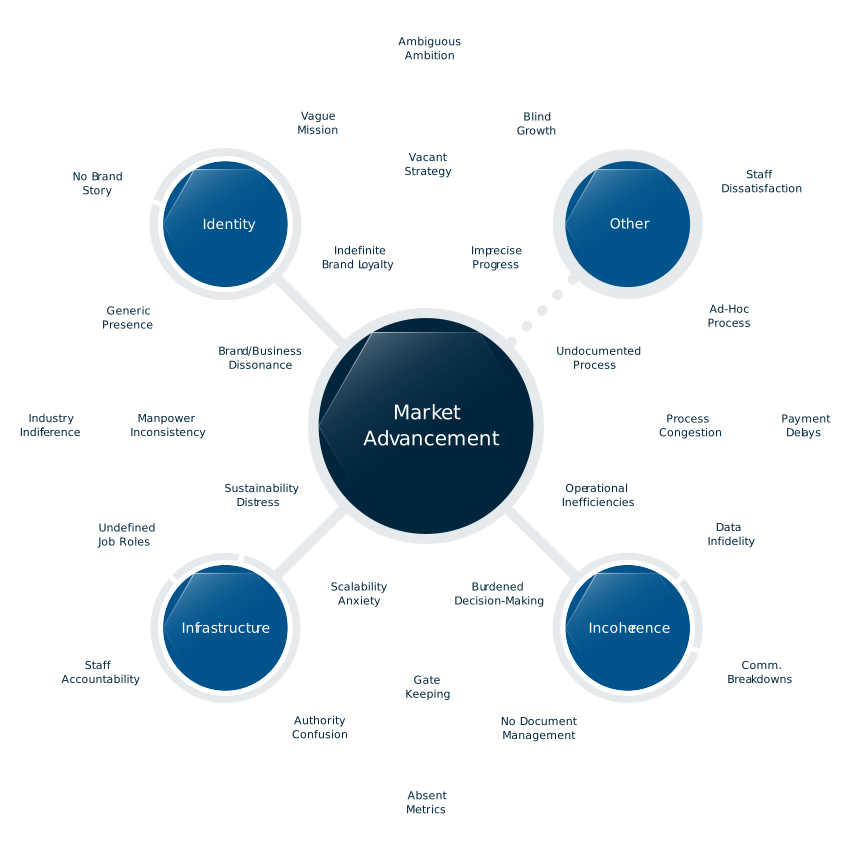
Jug's objective was to identify and validate the issues, prioritize their level of obstruction to market advancement, develop a strategy for each issue, implement the solution, and evaluate their success. An initial topic map outlining the issues Unimech believed were the primary obstacles to their central problem was generated.
TOPIC MAP
Although this map would be refined, it gave Jug and Unimech a shared vision and helped simplify the initial project focus. The topic map's objective was to reveal all the satellites circling the central problem Jug was trying to solve. It set the stage for every component that followed.

Unimech Topic Map

The initial topic map indicating Unimech’s theorized issues. This fundamental exercise is ideal for getting everyone on the same page with a clear representation of the current issues.

THE RESEARCH

The topic map led to Jug's first task: to bring some order to the chaos by determining the accuracy of Unimech's observations, identifying which pain points were most critical, prioritizing efficiency, and generating a comprehensive strategy. For Jug to accomplish this goal, he had to learn everything he could about Unimech's company, product, market, and industry.
BRAND RESEARCH
Jug familiarized himself with Unimech by reviewing internal documentation that provided him with an understanding of the current ecosystem of Unimech. He categorized this information into eight primary sectors of analysis, along with seven additional subcategories that proved necessary to differentiate due to the volume of information.
A video created in Blender to tease the categories of analysis that Jug used to classify the data points of Unimech.

COMPANY & CULTURE

VALUES & BELIEFS

IMPACTS & BENEFITS

INNOVATIONS & DIFFERENCES

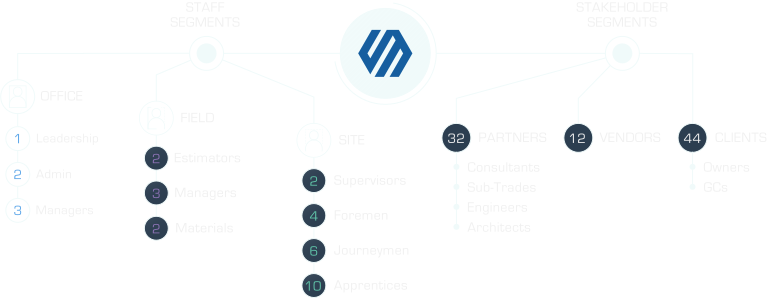
STAFF & STAKEHOLDERS

KNOWLEDGE & DOCUMENTS

OPERATIONS & PROCESSES

BRANDING & ADVERTISING

INDUSTRY & MARKETS

COMPETITORS & COMMUNITY

STRENGTHS & WEAKNESSES

OPPORTUNITIES & THREATS

TECHNOLOGY & SYSTEMS

PRODUCTS & SERVICES

ISSUES & STRATEGIES

The sectors of analysis: Company & Culture (with it's sub-categories Values & Beliefs, Impacts & Benefits, and Innovations & Differences), Staff & Stakeholders, Knowledge & Documentation, Operations & Processes, Branding & Advertising, Industry & Markets (with it's sub-categories: Competitors & Community, Strengths & Weaknesses, and Opportunities & Threats), Technology & Systems (which included the Product & Services sub-category), and Issues & Strategies.

Unimech’s internal documentation proved convoluted and conflicting, only mildly insightful, and mainly reinforced the organization's chaotic nature; however, Jug was undaunted and had several other avenues of research to investigate and validate the issues.
HEURISTIC EVALUATION
Jug planned to apply a heuristic evaluation to several components of Unimech in order to treat the organization as an interface that connects the internal with the external. The first scheduled component was a brand system review to evaluate Unimech's current brand guide and design system; unfortunately, Unimech had no brand guide or design system, so the review was limited to assessing their logo, business cards, rudimentary website, and random presentation templates. This proved that Unimech had no real identity for the internal to represent and no cohesive presence for the external to recognize and interact with.
The second component was an infrastructure system review, which connects Unimech's people, policy, and processes to the product. From this evaluation Jug found that Unimech’s infrastructure system consisted of an arcane employee manual, an irrelevant organizational chart, a lack of job roles and responsibilities, and an undocumented process flow. Jug hypothesized that this was the first source of Unimech’s issues and the most restricting to growth.
Without a proper infrastructure system, Unimech would never be able to provide a consistent product; without a consistent product, a slick brand would be incapable of advancing or sustaining a new market tier.
It was hypothesized that internal factors were a more significant issue than the external ones, but further research would be required to validate them.
KPIs
Jug attempted to analyze Unimech’s KPIs and found them to be either non-existent or ill-equipped to provide significant feedback. The owner had compiled a list of potential metrics, but nothing had been implemented to capture them efficiently. Jug included KPI and metric creation into the project roadmap, which led gracefully into an analysis of Unimech’s technology.
SOFTWARE ASSESSMENT
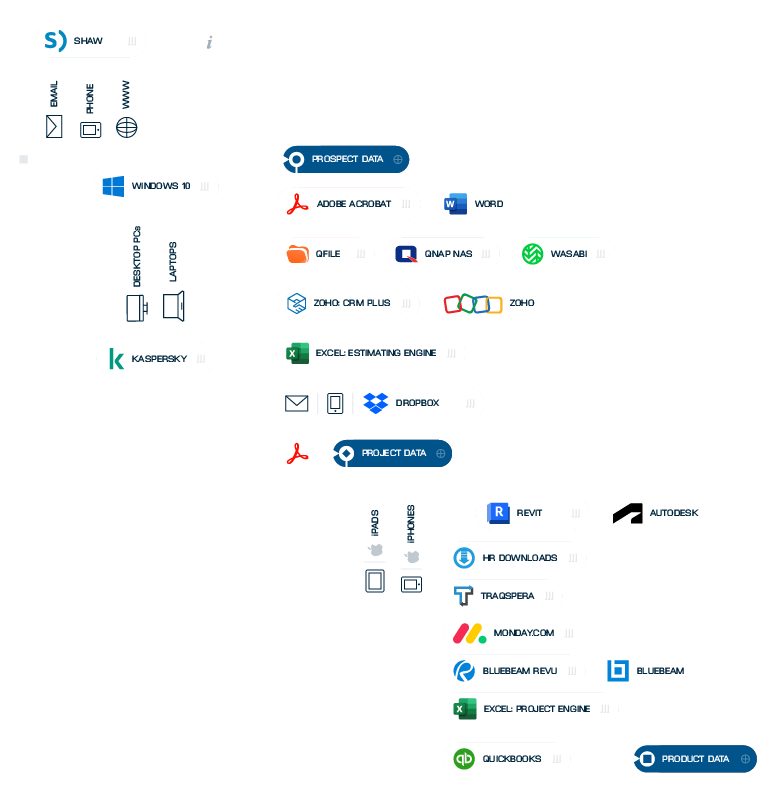
Jug categorized each of Unimech’s 15+ technologies and developed a data flow to show their sequence, purpose, necessity, and efficiency in Unimech’s operations.

Unimech's Interactive Data Flow

An interactive visualization of Unimech's data flow, mapping their technology stack and assessing components for purpose, necessity, and efficiency. Created in Adobe Animate and implemented as an HTML Canvas, you can interact with nodes to view additional information (such as the nodes' necessity and efficiency score).

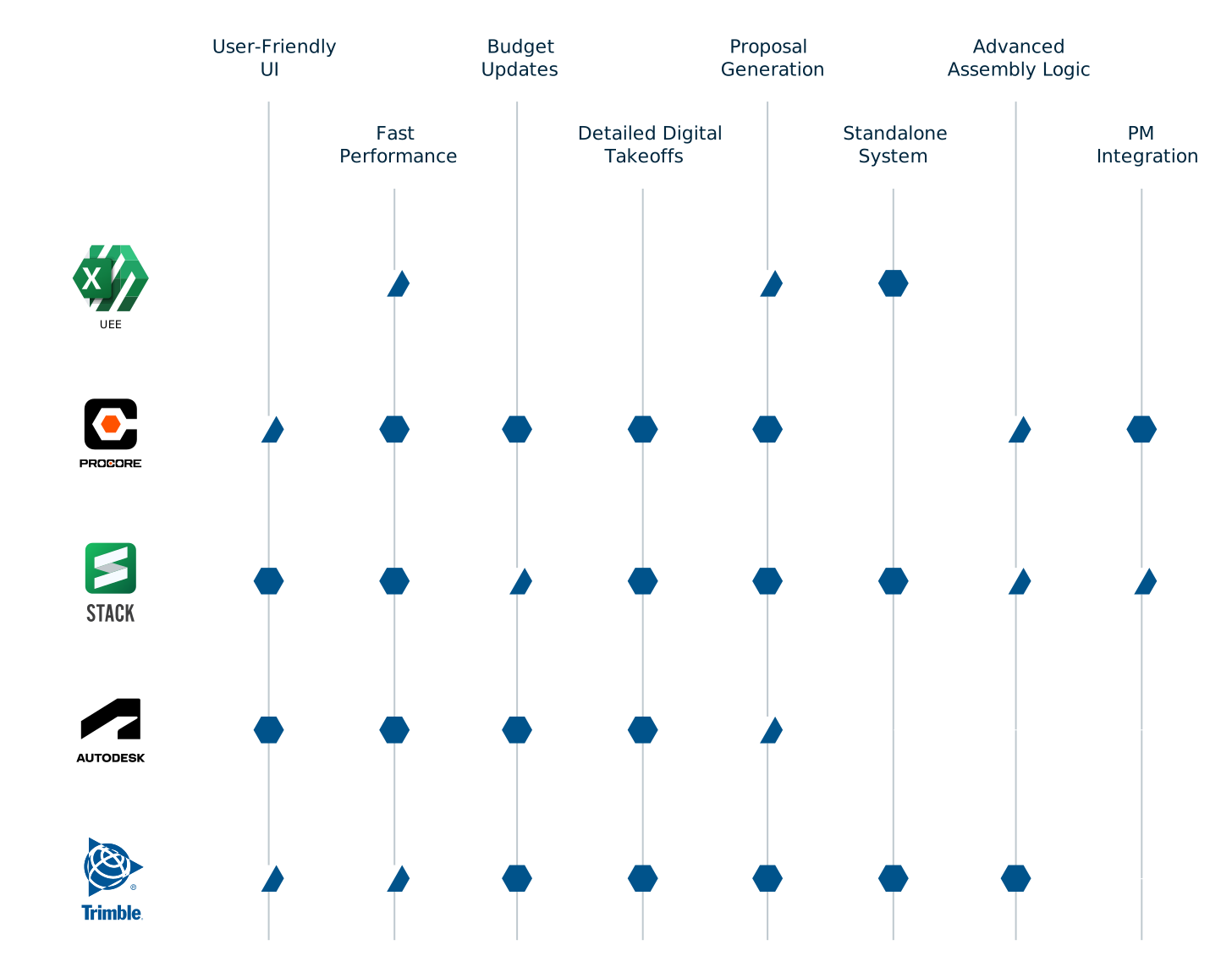
A feature assessment was completed for each of these technologies to record their strengths and weaknesses. Jug included a minimum of two alternatives for each software for comparison. In some cases, multiple technologies were already being used for the same purpose and were included for comparison. Alternatives were selected based on information found on review and comparison websites, such as Capterra or G2, industry publications and journals, third-party outreach, and the skill requirements of competitor job postings.

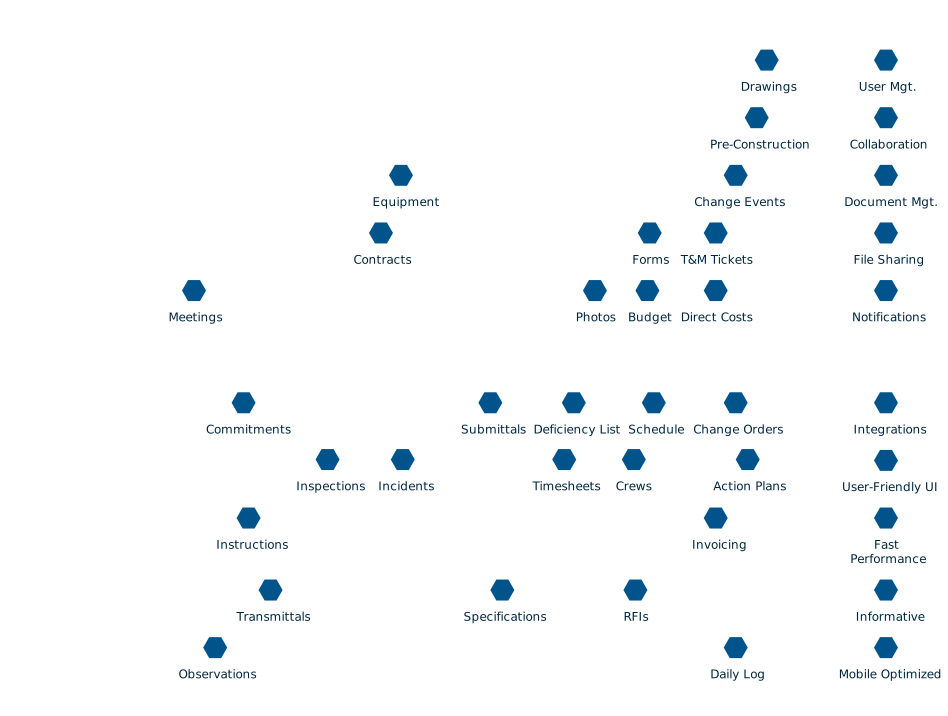
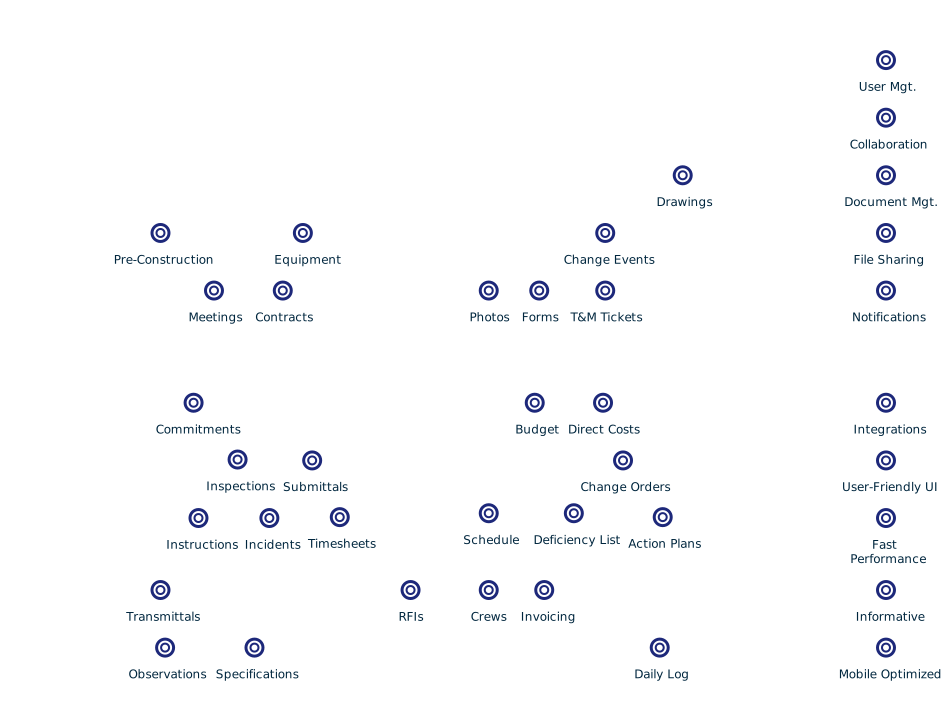
Estimating Engine Feature Assessment

A feature assessment analyzing the estimating component of Unimech's technology stack. Partial hexagons reflect partial features.

Jug identified that Unimech’s technology stack consisted of several fragmented siloed applications being used provisionally without integration, collaboration, or management initiatives. The research emphasized four options: Enterprise resource planning (ERP), integrated project management software, API integration, and a custom build solution. The leadership team had experience with existing ERP solutions and was not interested in applying one to Unimech. An integrated project management platform was a consideration, but Jug hadn’t identified any worth the reliance, disruption, and subjugation required for implementation. An API integration was the most logical choice, but the research indicated that Unimech’s current application stack must be optimized first. Proprietary technology was still the answer in the mind of Unimech’s ownership and remained the final goal of Jug’s work.
COMPETITIVE ANALYSIS
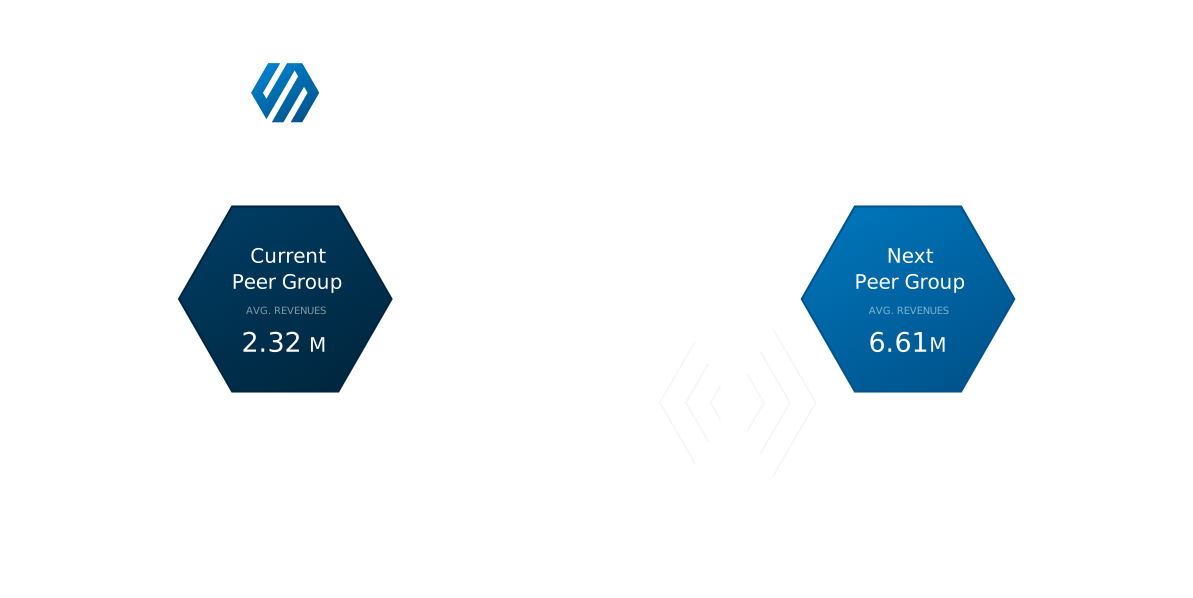
Next, Jug compiled a list of competitors in Unimech’s current peer group and created a list of competitors in the following market tier. This was done by implementing a bid tracker, which allowed the estimators to document who Unimech was up against and frequently note who was winning the project bids. This system was augmented by reviewing business opportunity websites like merx.com, search engine rankings, job posting sites, infrastructure postings via municipal and provincial websites, competitor announcements, and staff experience.

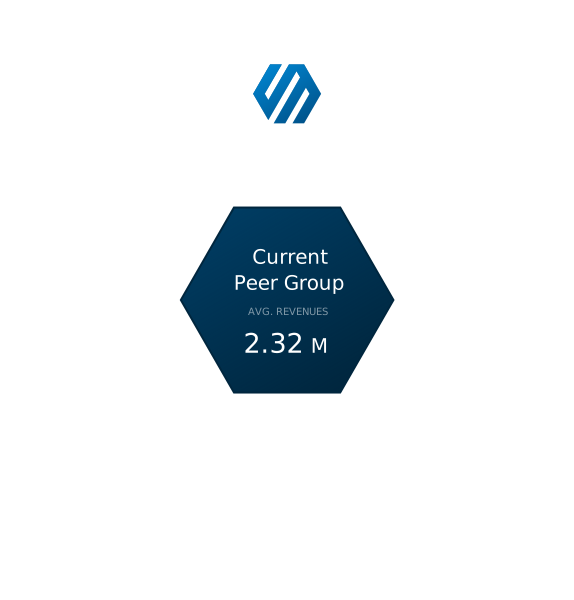
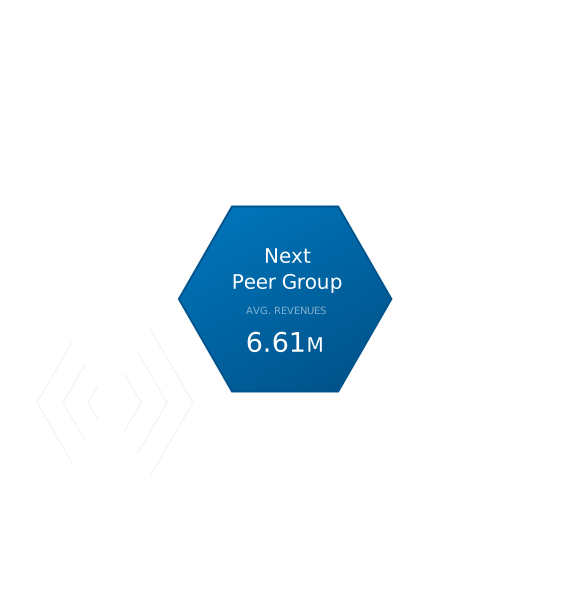
Unimech's Competitor Groups

An image of Unimech's competitors categorized by their current peer group and their target peer group.

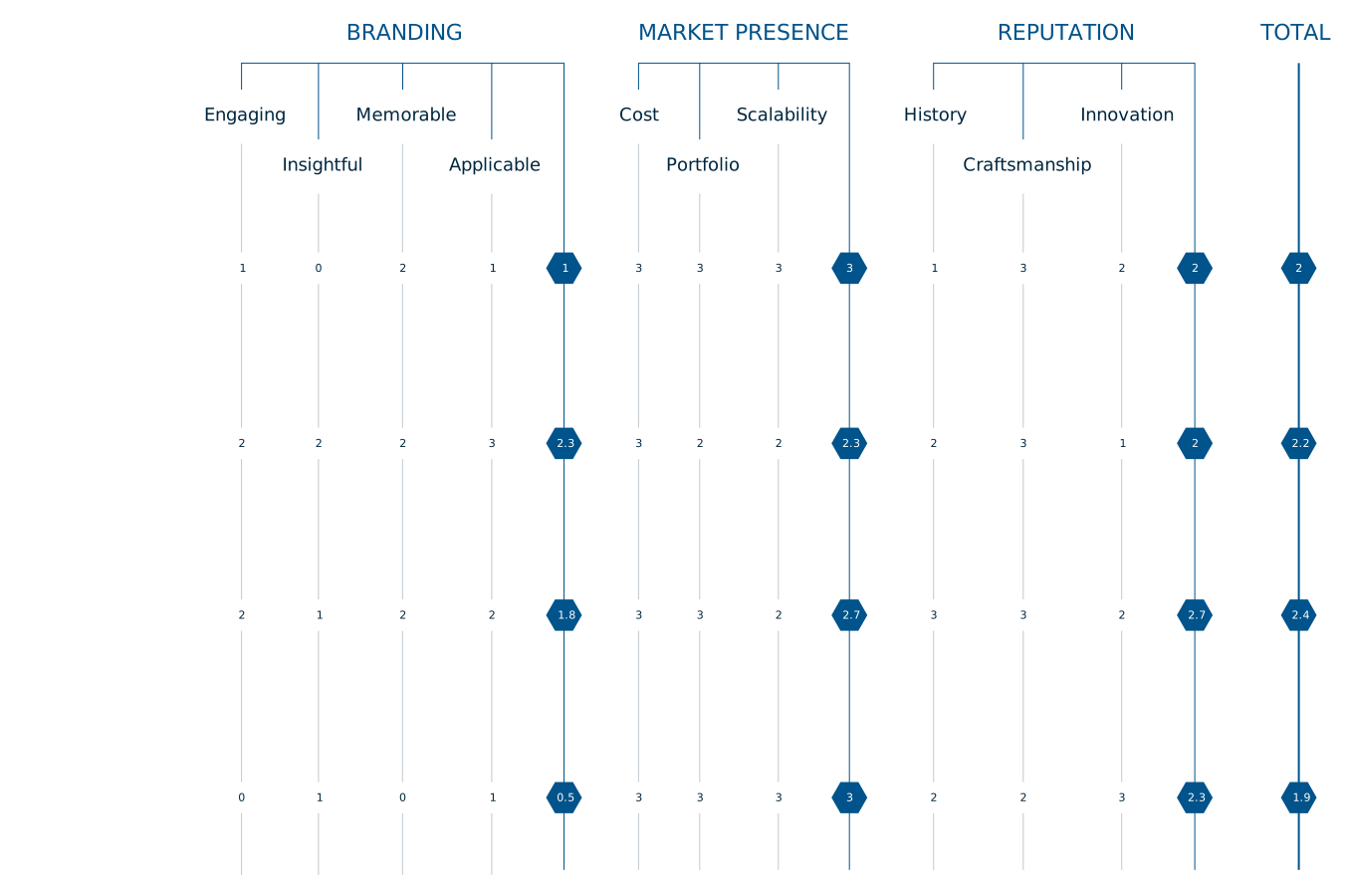
Jug prepared a preliminary set of evaluators to function as “features” of each competitor and scored them on a scale of 1 to 3, with one being “Poor”, two being “Fair”, and three being “Good”.

Competitor Analysis: Branding

A visualization of the competitor feature comparison showing three categories of comparison: "Branding", Market Presence", and "Reputation". These forms of assessment are good for quickly referencing results.

Jug knew this process would take some time to collect valid data, so he set this up first before focusing on Unimech's internal staff and stakeholders.
SURVEYS
Jug’s field of users was already a captive audience eager to offer their input, which allowed for a comprehensive survey design that: quantified the issues, clarified precisely who Unimech was as a company, and revealed concise internal user personas and stories. The survey was created using an online assessment tool called Surveyanyplace and involved branching logic. It was sent in three parts to be mindful of the user’s time and delivered via a URL link provided in an email. Here are some of the key insights:

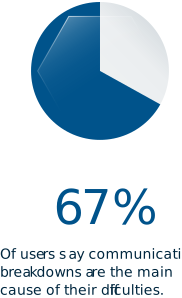
“Construction is an activity built upon clear and well understood communication, and that so rarely occurs that it leads to many difficult moments.”

Survey Respondent No. 1

The surveys were crucial in consolidating information missing from the brand research categories. Still, the final validators would be found in the last two research methods, contextual inquiries and interviews.
CONTEXTUAL INQUIRIES
Contextual inquiry exposed Jug to Unimech's actual operations, the reasoning and logic of the decision-makers, and the dynamic of its internal team. And this significant exposure (in both the office and the field) quickly validated that the office staff were responsible for generating the most critical issues. The task became how to navigate amongst this group, while collecting data to validate their inefficiencies, without raising any feelings of threat that might jeopardize the integrity of the project.
INTERVIEWS
After conducting contextual inquiries and reviewing the survey data, Jug created a list of innocuous (but calculated) interview questions to follow up and challenge the users whose processes, responsibilities, and authority seemed to generate the most significant conflicts.
The results of this process finalized the key issues that prevented Unimech from entering the next market tier and identified others that threatened current and future operations. It was time to present the findings and prepare for the project's next phase.

THE PLAN

During Jug’s research, he had grown increasingly concerned with the fragility of Unimech’s position; it felt like layers of Band-Aids were holding together their entire operation. Jug knew that a traditional whitepaper plan wouldn’t be utilized in time; he needed to come up with something innovative, actionable, and relevant—something that would begin to solve problems while informing and laying the foundation for Unimech’s proprietary technology. Let’s not forget the scope of the project:

Project Scope

A visualization of the 3 facets of the project to act as a reminder of the project scope.

UNIMECH STRATEGY PLATFORM
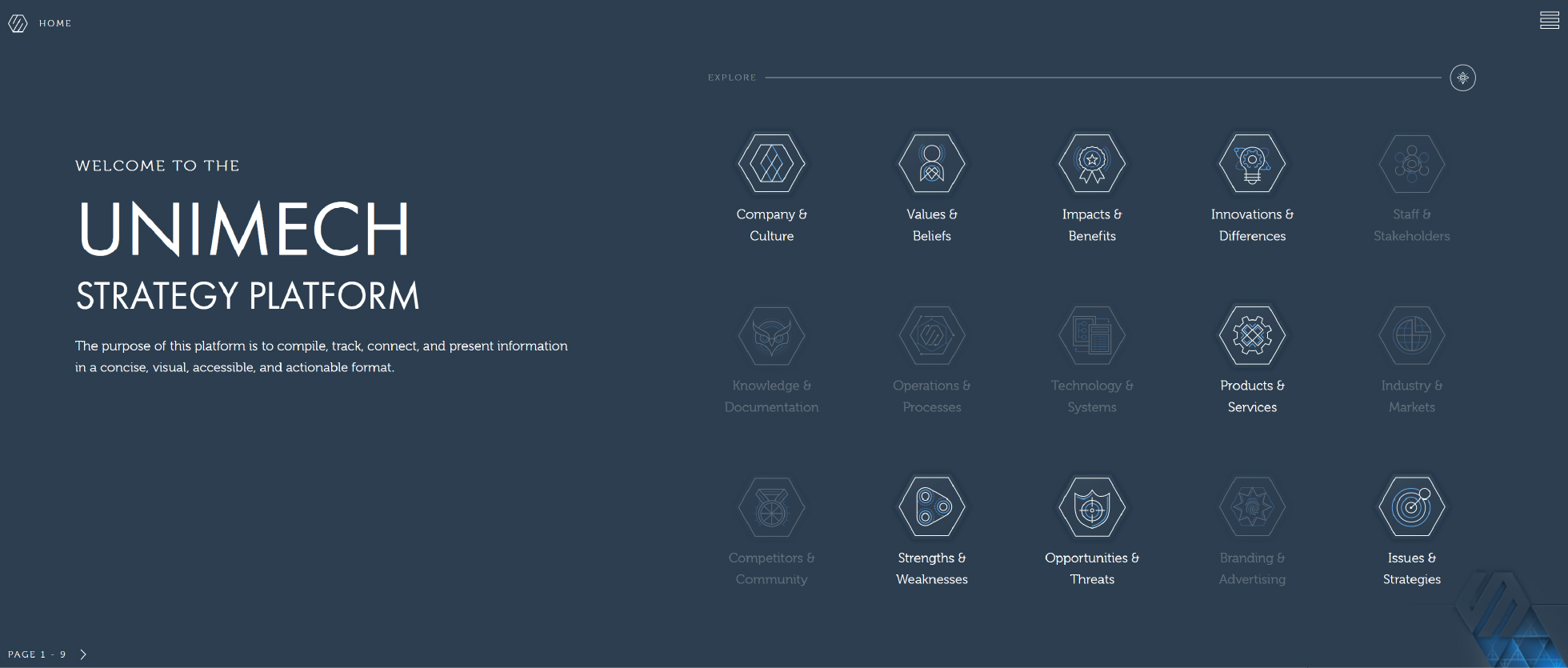
Jug started by creating the Unimech Strategy Platform (USP), an interactive portal designed to compile, track, connect, and present Unimech’s data in a concise, visual, accessible, and actionable format.

Home screen of the Unimech Strategy Platform (USP) - Originally prototyped in Adobe XD, it was translated into a responsive web application using HTML. This version has been reproduced in a limited capacity for representational purposes.

The USP combined aspects of a needs assessment, feature prioritization (with features being replaced by solutions in some areas), affinity mapping, platform research, and environmental analysis to calibrate the data. You can browse a limited version of it by clicking the button below.

Unimech Strategy Platform

Home

PAGE 1 - 9

WELCOME TO THE

UNIMECH

STRATEGY PLATFORM

The purpose of this platform is to compile, track, connect, and present information in a concise, visual, accessible, and actionable format.

EXPLORE

Company & Culture

PAGE 2 - 9

Company Overview

NAME

Unimech

TYPE

Mechanical Contractor

TENURE

  • Universal Mechanical
    2006 - 2018
  • Unimech
    2018 - PRESENT

SPECIALTIES

  • Commerical Projects

TENDER CATEGORIES

  • Extended duration
  • Special Projects

SERVICE AREAS

  • Calgary, AB

KEY PRODUCTS

  • Plumbing
  • Gas Fitting
  • Sheet Metal
  • HVAC
  • Hydronics
  • Refrigeration
  • Fire Suppression

KEY SERVICES

  • Bid + Spec
  • Design Build
  • Design Assist
  • Cost +
  • Forced Price
  • Management
  • Integrated Project
  • GMP
  • Service + Custom
  • Design + Pre-Fab

SIZE

0 - 35

EST. REVENUE

$$M (Annual)

BRIEF

Founded in 2006, Unimech (formerly Universal Mechanical) has a long history of delivering complex projects safely and successfully.

Unimech built their reputation in commercial tenant improvements. Over the past decade Unimech has continued to deliver great results in commercial and industrial settings.

ACCREDITATIONS

  • Credit of Certification (COR): Jan. 21, 2020

MEMBERSHIPS

  • APEGA
  • CCA
  • MCA
  • ACSA

Ecosystem

STRUCTURE

SEGMENTS

  • (IN) Industrial
    12%
  • (CO) Commercial
    24%
  • (RE) Residential
    4%
  • (IF) Infrastructure
    18%
  • (IS) Institutional
    22%
  • (SP) Specialty
    20%

MARKETS

  • (SC) Schools
    24%
  • (SF) Single Family
    18%
  • (HO) Hospitals
    6%
  • (MF) Multi-Family
    20%
  • (MU) Mixed Use
    22%
  • (OB) Office Buildings
    10%

IMPACTS

Under review.

BENEFITS

Under review.

INNOVATIONS

Under review.

DIFFERENCES

Under review.

Culture

CULTURE

  • Supportive & Collaborative
  • Innovative & Ambitious
  • Accessible & Appreciative
  • Equitable & Rewarding
  • Professional & Productive

VALUES

  • Integrity
  • Quality (Workmanship)
  • Stewardship

BELIEFS

  • Be essential
  • Be versatile
  • Be resouceful
Values & Beliefs

PAGE 3 - 9

  • Values

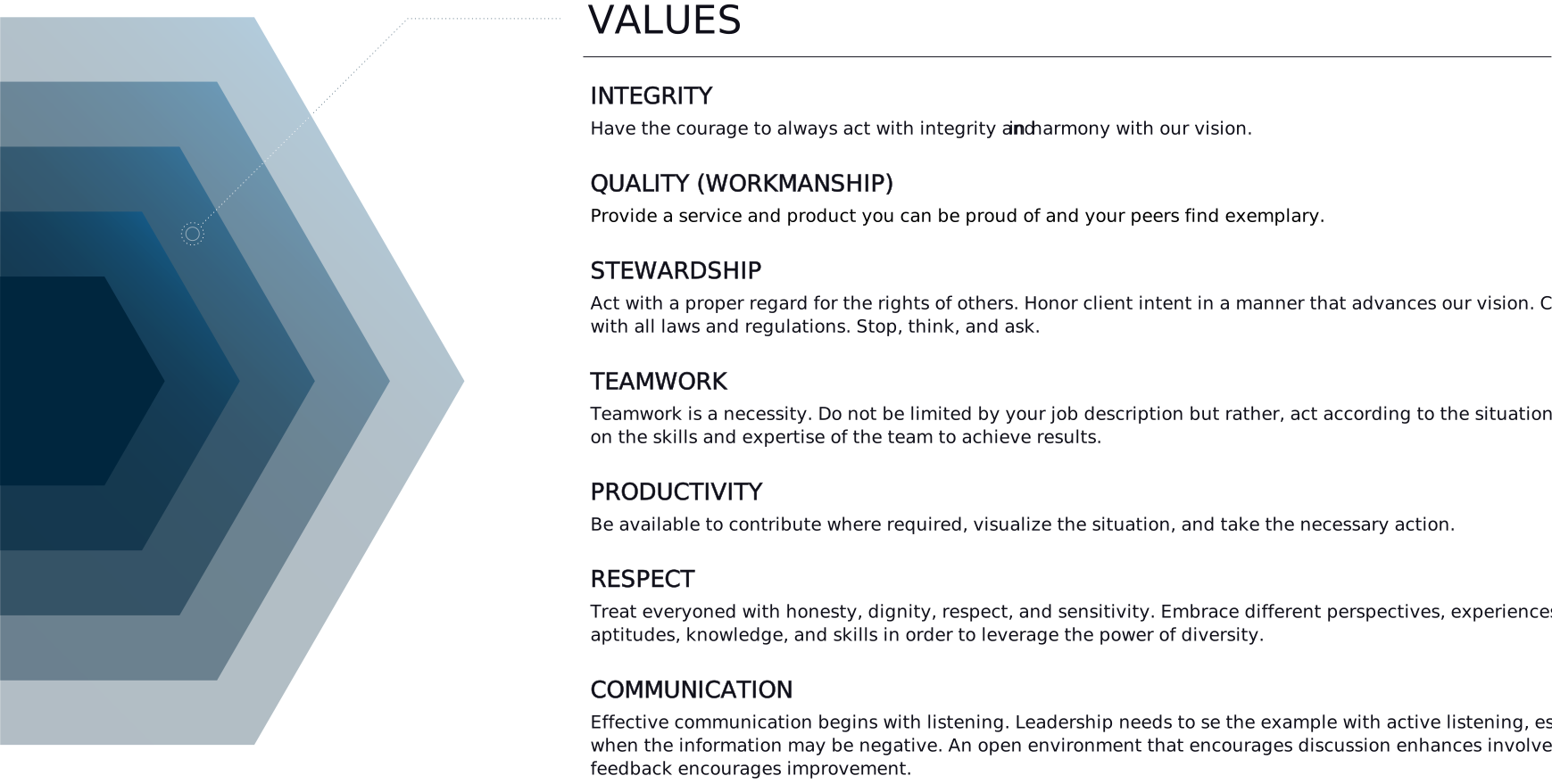
    Unimech's chosen values were validated by the frequency of these terms (and definitions) reflected by an internal survey and interviews, external analysis (i.e., external survey, web/market/social research). This research was conducted over the period of 04.13.2020 - 05.22.2020.

FOCUSED

  • Integrity

    Have the courage to always act with integrity and in harmony with our vision.

  • Quality (Workmanship)

    Provide a service and product that you can be proud of and your peers find exemplary.

  • Stewardship

    Act with a proper regard for the rights of others. Honor client intent in a manner that advances our vision. Comply with all laws and regulations. Stop, think, and ask.

  • Teamwork

    Teamwork is a necessity. Do not be limited by your job description but rather, act according to the situation. Draw on the skills and expertise of the team to achieve results.

  • Productivity

    Be available to contribute where required, visualize the situation, and take the necessary action.

  • Respect

    Treat everyoned with honesty, dignity, respect, and sensitivity. Embrace different perspectives, experiences, aptitudes, knowledge, and skills in order to leverage the power of diversity.

  • Communication

    Effective communication begins with listening. Leadership needs to se the example with active listening, especially when the information may be negative. An open environment that encourages discussion enhances involvement, and feedback encourages improvement.

GENERATED (06.01.2020)

  • Integrity
  • Stewardship
  • Communication
  • Quality (Workmanship)
  • Respect
  • Hard Work (Productivity)
  • Teamwork
  • Knowledge
  • Compliance
  • Honesty
  • Competency
  • Proactivity
  • Determination
  • Loyalty
  • Trust
  • Relationships
  • Family
  • Safety
  • Team Atmosphere
  • Good Work Environment
  • Fairness
  • Beliefs

    Unimech's beliefs were validated by the frequency of these terms reflected by an internal survey and interviews, and external analysis in the form of client feedback. This research was conducted over the period of 04.13.2020 - 05.22.2020.

FOCUSED

  • Be essential

  • Be versatile

  • Be resourceful

  • Be strategic

  • Be tenacious

  • Be useful

  • Be erudite

GENERATED (06.01.2020)

  • Personal growth = Business growth
  • Be adaptable
  • Measure twice, cut once
  • Lead by example
  • Implementation is key
  • Support is success
  • Everything is a relationship
  • Dignity is a human right, reciprocity is human nature
  • Change is inevitable and unexpected
  • Teamwork makes the dreams work
  • Pursue strengths
  • Embrace communication
  • Welcome change
  • Co-ordination is paramount
  • Believe in growth
  • Believe in improvement
  • Believe in people
  • Safety is crucial
  • Fairness requires sacrifice
  • Patience is a virtue
  • Accurate training = Precise professionals
Impacts & Benefits

PAGE 4 - 9

Impacts

INTERNAL

  • Unimech is taking on larger projects.
  • Staff satisfaction has increased exponentially.

EXTERNAL

  • Increased name recognition.
  • Promote a higher quality of documentation, product quality, and technological application.
  • Positive word of mouth from job candidates.

Benefits

INTERNAL

  • Leverage technology such as 'Building Information Modeling (BIM)' to keep Unimech lean.
  • Staff are enthusiastic and want to help Unimech grow and be successful.
  • Company culture endorses an environment of staff improvement and well-being.
  • Unimech has an invested ownership focused on human resources.

EXTERNAL

  • Expert attention to product quality.
  • Stringent imposition to safety and legal protocols.
  • Responsive stewardship.
  • Invested staff and a supportive, team-orientated infrastructure.
  • Advanced understanding of professional standards (especially on complex projects).
  • Dedication to versatility allows for increased capacities and capabilities.
  • Ability to offer favorable capacity vs. cost at current scale/position.
  • Implements innovations such as BIM, which allows work to proceed quickly, shortens the RFI process and trade co-ordination, and aids in documentation/recall.
  • Focus on optimizing staff knowledgebase, critical-thinking and problem-solving, and innovative implementation.
Innovations & Differences

PAGE 5 - 9

Innovations

INTERNAL

  • Building Information Modelling (BIM)
  • Business Process Modelling (BPM)

EXTERNAL

  • None currently identified

Differences

INTERNAL

  • Focus and dedication to improvement that has not been seen by staff at other companies.
  • Great team attitudes and a strong emphasis on personal growth.
  • Unimech offers a larger knowledgebase than other companies it's size.
  • Devotion to company culture allows staff to know each other on a more personal level.

EXTERNAL

  • Unimech has good standing with suppliers and sub-trades because it values paying invoices on time.
  • Unimech has a vast resource of business knowledge and experience backing it.
Products & Services

PAGE 6 - 9

Products

Plumbing

Creating and optimizing systems to distribute and transport water from a source to water fixtures and appliances.

Gas Fitting

Implementing equipment (such as: piping valves and meters) to convey gas from the main to the fixtures of an individual installation.

Sheet Metal

We specialize in and self-perform sheet metal scope in house. Anything connected to air distribution be it demolition, design, supply, fabrication, installation, testing, maintenance, or repair.

HVAC

Installation and optimization of heating, ventilation, and air conditioning systems.

Hydronics

The construction and application of a system that heats water at it's source via super energy-efficient gas boilers and moves the water through sealed pipes to radiators.

Refrigeration

We offer managed refrigeration services in the form of the design, fabrication, installation, testing, maintenance, repair, and removal of anything connected to the cooling of a space, substance or system to a temperature below ambient.

Fire Suppression

We work with licensed engineers and certified sprinkler fitters in designing, building and verifying your building’s fire suppression systems. These systems are handled outside of the traditional design oversight process due to the critical nature of the services they provide and the elevated status their performance carries prior to achieving occupancy for your space.

Services

Bid + Spec

A method where a detailed specification that outline's the project requirements, materials, standards, and other crucial details is used to generate a project bid to ensure clarity and uniformity.

Design Build

A method of project delivery in which Unimech works under a single contract with the project owner to provide design and construction services. One contract, one unified flow of work from initial concept through completion.

Design Assist

A method of construction that requires builder involvement in the design phase from the very beginning of the project’s inception. It relies on ample communication between the design teams and the construction teams to ensure that project planning accounts for the real-world issues that can arise.

Cost +

A contract such that Unimech is paid for all of its allowed expenses, plus additional payment to allow for risk and incentive sharing.

Forced Price

This contract establishes a single, pre-determined fixed price, or lump sum, for the project.

Management

A form of contract where Unimech assumes consulting responsibility but is not responsible for the explicit design or construction.

Integrated Project

An approach that integrates people, systems, business structures and practices into a process that collaboratively harnesses the talents and insights of all participants to optimize project results, increase value to the owner, reduce waste, and maximize efficiency through all phases of design, fabrication, and construction.

GMP

GMP means 'Guaranteed Maximum Price'. A method of contract that sets a maximum cost for the construction work of a project.

Service + Custom

A designation referring to maintenance or adhoc projects that require a unique solution.

Design + Pre-Fabrication

A category of service which refers to R&D, Visualization, and other alternative forms of production (e.g., AR, VR).

Strengths & Weaknesses

PAGE 7 - 9

Strengths

  • Unimech recognizes and is willing to adopt new technology and systems to streamline and optimize processes.
  • Unimech's culture promotes improvement and value at each level of the organization.
  • Unimech has a large knowledgebase and skillset packed into a small workforce.
  • Unimech has very experienced and knowledgable individuals in leadership roles.
  • Unimech has a favorable reputation in the industry by holding no outstanding debts and treating all stakeholders with respect.
  • Unimech has positive name recognition for the product/service quality, documentation and stewardship.
  • Unimech is versatile and ambitious.

Weaknesses

  • Unimech staff's understanding of responsibilities, expectations, organization and hierarchy is based on assumptions.
  • Unimech does not have their business processes defined or documented.
  • Unimech does not have their project process defined or documented.
  • Unimech is not maximizing the technological and systemic capabilities.
  • Unimech does not have an integrated or universal technology that merges their fragmented ERP, estimating, project management, etc. requirements.
  • Unimech suffers from consistent communication breakdowns.
  • Unimech experiences extreme data infidelity.
  • Unimech's infrastruture and operations are not conducive to collaboration, accountability, or support.
  • Unimech's decision-makers have limited oversight that compromises their ability to allocate resources quickly or enforce proper accountability.
  • Unimech does not have a concise and recognizable brand or identity.
  • Unimech is unable to collect invoice balances in an appropriate time.
  • Unimech's success is dependent on individuals.
  • Unimech's estimating process/engine is manual and non-collaborative.
  • Unimech's estimating model requires new work to cover old work and deficiencies.
Opportunities & Threats

PAGE 8 - 9

Opportunities

  • Implement environment-friendly products, materials, and equipment.
  • Master multi-trade/multi-city contracting.
  • Improve cash velocity and reduce contract dispute rates by innovating the application of smart contracting.
  • Enforce accountability in the engineering and construction profession through innovation, technology creation/adoption/adaptation, and technology expertise.
  • Develop a proprietary systems and technology (e.g., estimating engine, project management) that can be commercialized.
  • Innovate the application of heat pumps and emission reduction.
  • Innovate the reduction of mechanical system risks to long-term property owners.
  • Advance into a less saturated, more visible market tier.
  • Position to qualify for government institutions.
  • Formulate foundational processes from redundancies to streamline onboarding, training, and project management processes.
  • Increase community network through sub-trade schools like SAIT and AIT.
  • Improve the bid-tracking process to include data on all open leads (not just those pursued).
  • Develop a unique market presence to stand out from generic, interchangeable, forgettable competitors.
  • Master and adopt potential technologies like (AR) Augmented Reality (*for real-time/on-site planning and visualization), and (ML) Machine Learning (*for insight creation, resource allocation, and risk management).
  • Consider virtual assitants to streamline and focus operations while limiting adminstrative stress, thereby increasing the value of assets, expanding operational capacity, and mitigating scalability concerns.

Threats

  • Undefined organization, hierarchy, job roles, and job expectations.
  • Undefined processed cause delays, mistakes, poor training capacity, etc.
  • Frequent communication breakdowns.
  • Economic uncertainty.
  • High depedence on individuals that compromise professionalism and the culture of Unimech.
  • Several scalability concerns, including manpower, infrastructure, technology, communications, and documentation.
  • Poor (i.e., non-existent) document control.
  • Current estimating process/engine is arcane, manual, static, and cumbersome.
  • Data gathering is weak (i.e., non-existent).
Issues & Strategies

PAGE 9 - 9

Issues & Strategies

ISSUE: 01

No clearly defined job roles or expectations.

The job roles and expectations of Unimech staff have not been clearly defined, documented, or communicated.

DEFICIENCIES (3/3)

  • Communication breakdowns
  • Operational inefficiencies
  • Staff dissatisfaction

STRATEGIES (1/1)

Define, document, and communicate job roles and expectations.

ISSUE: 02

Undocumented and un-established process/workflows.

The processes and workflows of Unimech have not been defined, documented, or communicated, and are arcane for staff.

DEFICIENCIES (3/6)

  • Communication breakdowns
  • Operational inefficiencies
  • Process congestion

STRATEGIES (1/1)

Define, document, communicate, and visualize processes and workflows.

ISSUE: 03

Operations, processes, and infrastructure are dependent on a single keymaster.

Key elements of Unimech's operations are dependent on single individuals and siloed departments.

DEFICIENCIES (3/6)

  • Gatekeeping
  • Poor performance
  • Compromised scalability

STRATEGIES (1/1)

Re-define the infrastructure to share ownership of business and project processes.

ISSUE: 04

Static, obstinate, and arcane estimating process/engine.

Current estimating process/engine is not accommodating to all necessary users and lacks adaptability, transparency, and versatility.

DEFICIENCIES (3/4)

  • Process congestion
  • Sustainability risk
  • Compromised scalability

STRATEGIES (1/1)

Define the estimating process while translating the IP into an efficient proprietary platform.

ISSUE: 05

Burdened decision-making.

Key decision-makers don't have access to necessary data to make real-time, actionable decisions.

DEFICIENCIES (3/6)

  • Project delays
  • Allocation deficiency (Manpower)
  • Compromised scalability

STRATEGIES (1/1)

Centralize, summarize, and visualize real-time decision-making data.

ISSUE: 06

Partitioned technology and data.

Unimech does not have a unified technology suite. ERP, Estimating Engine, Project Management tools are ad-hoc.

DEFICIENCIES (3/6)

  • Data infidelity
  • Communication breakdowns
  • Compromised scalability

STRATEGIES (1/1)

Develop a scalable, cost-effective, and unified data and technology suite.

ISSUE: 07

Change of scope and payment delays (i.e., project ransoming).

Unimech is at the merch of their stakeholders concerns on payment delays and contract alterations.

DEFICIENCIES (3/6)

  • Revenue loss
  • Project delays
  • Growth obstruction

STRATEGIES (1/1)

Establish a system of oversight and smart contracting.

ISSUE: 08

Lack of a cohesive and recognizable market presence.

Unimech does not have a comprehensive brand story, identity, position, or strategy.

DEFICIENCIES (3/6)

  • Identity crisis
  • Sustainability risk
  • Compromised scalability

STRATEGIES (1/1)

Define a brand identity, position, and strategy for Unimech.

Issues & Strategies | Issue: 01

PAGE I01

ISSUE

ACTIVE

No clearly defined job roles or expectations.

BRIEF

The job roles and expectations of Unimech staff have not been clearly defined, documented, or communicated.

Effects

MANIFESTATIONS

    1. Communications are received by the wrong party because the appropriate target has not been identified.
    2. Communications are received by the correct party but it is not recognized as the party's responsibility or authority.
    3. Communication semantics do not have an established and recognizable translation order or process.
    4. Communications are lost or altered because the target is not defined, or there is a deficiency in the process or channel.
    5. Communication fidelity is assumed or inefficiently investigated (i.e., cross-referenced).
    1. Operations are authorized and/or undertaken by the wrong party.
    2. Operations are authorized and/or undertaken by the correct party, but the operation is not fully understood.
    3. Optimized and necessary operations are not being recognized and completed.
    4. Operations are not being defined or put into a repeatable process causing operational ambiguity and re-work
    5. Operational decision-making is delayed by consistent role validation.
    1. Staff have ambiguous targets for performance that hinders and removes their sense of accomplishment and satisfaction.
    2. Staff are not confident in their tasks and feel isolated in the process.
    3. Staff do not recognize their authority, place, or aspirations.
    4. Staff do not recognize their peers authority, place, or aspirations.

Strategy

Define, document, and communicate job roles and expectations.

OBJECTIVE

Eliminate communication breakdowns, operational inefficiencies, and staff dissatisfaction caused by a misunderstanding of job roles or expectations by establishing a clear and accessible definition of each staff member's roles, expectations, and responsibilities.

STRATEGY MAP

Collect current internal job role and expectation data from staff and leadership.

Collect external job role and expectation data from external sources (e.g., job posting sites, job statistic sites, job networking sites, competitor and peer websites.

Compile the job role and expectation data into this Unimech Strategy Platform (USP), or QNAP File Structure in the form of Excel spreadsheet or Google Sheet.

Compare the internal job role and expectation data to the external job role and expectation data.

Establish accurate job roles and expectations for each staff members position.

Schedule review sessions with staff members to beta proprosed job roles and expectations.

Review the revised job roles and expectations to each staff member.

Implement the new job role and expectation data into other relevant USP categories:

Assess the impact on any additional USP categories.

Communicate the existence of an update to the status of job roles and expectations to each staff member, including any updates made to the USP categories.

Continue to track the issue using the outcomes path under this category.

STRATEGY OUTCOMES

Hold staff members accountable to new job roles and expectations.

Monitor and analyze the results against the issue effects to quantify outcomes.

Generate any notes or new issues resulting from the strategies implementation.

Translate the created process into new administrative or operational processes in the 'Operations & Processes', or 'Knowledge & Documentation' USP categories. Assign the job role to the appropriate staff member.

Update or archive the issue under the 'Issues & Strategy' category.

INTERNAL USER PERSONA & STORIES
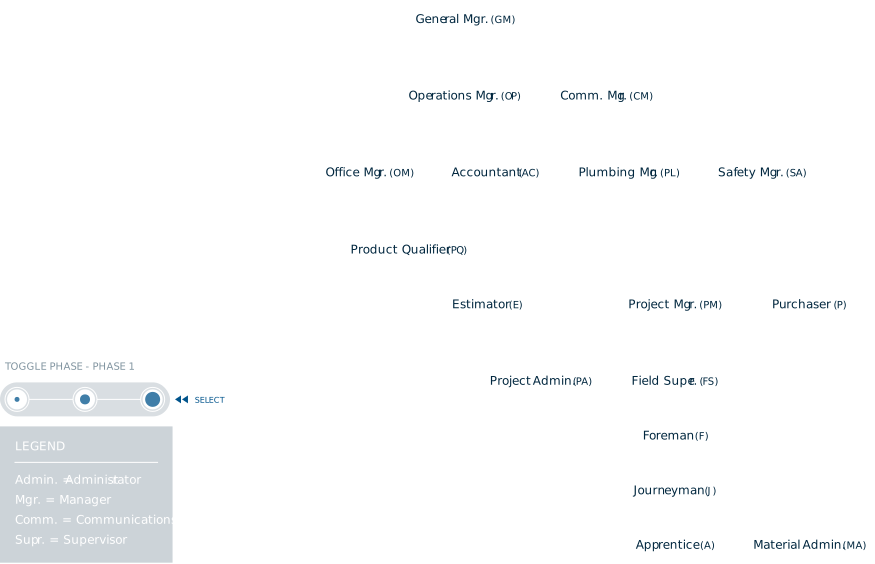
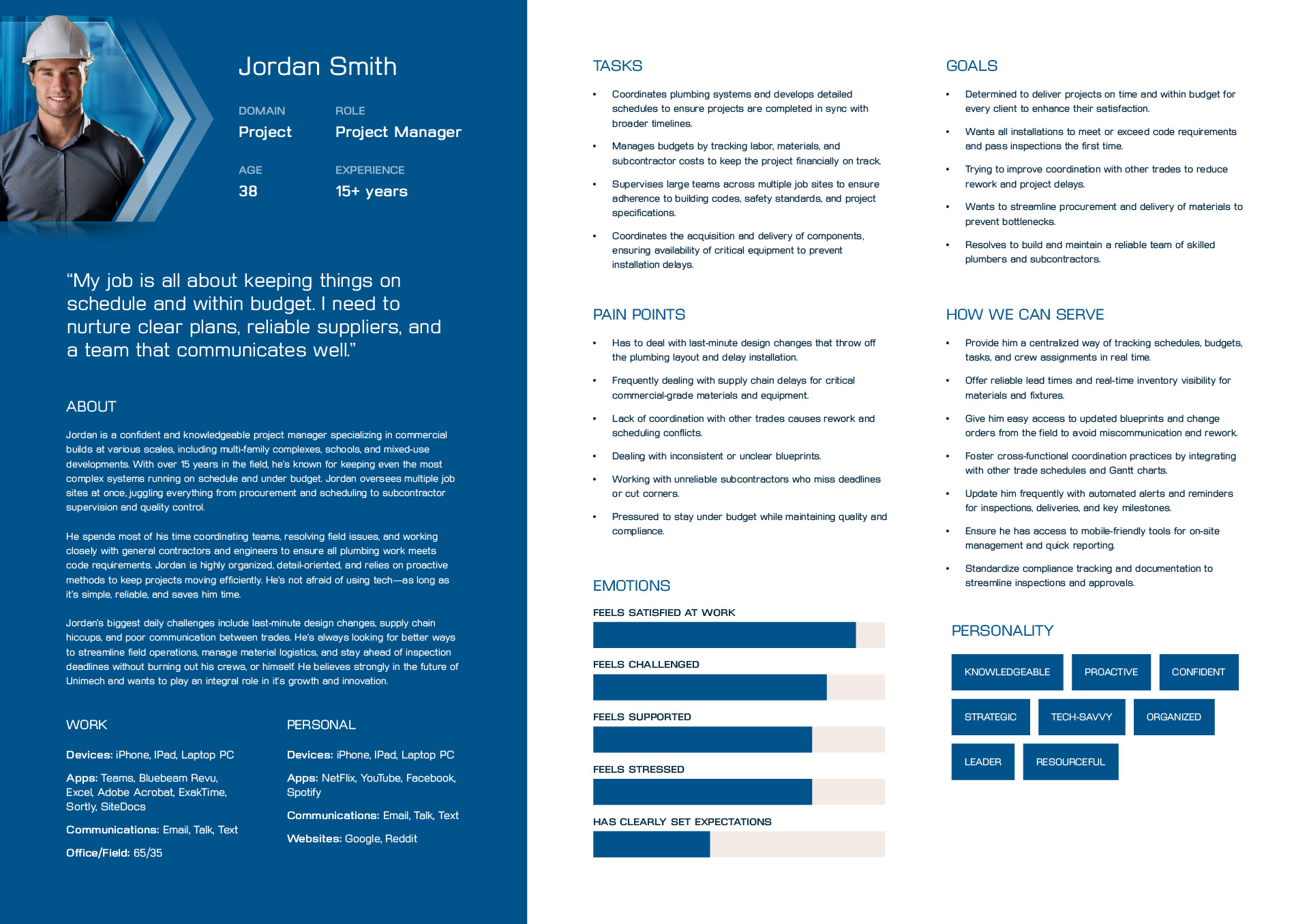
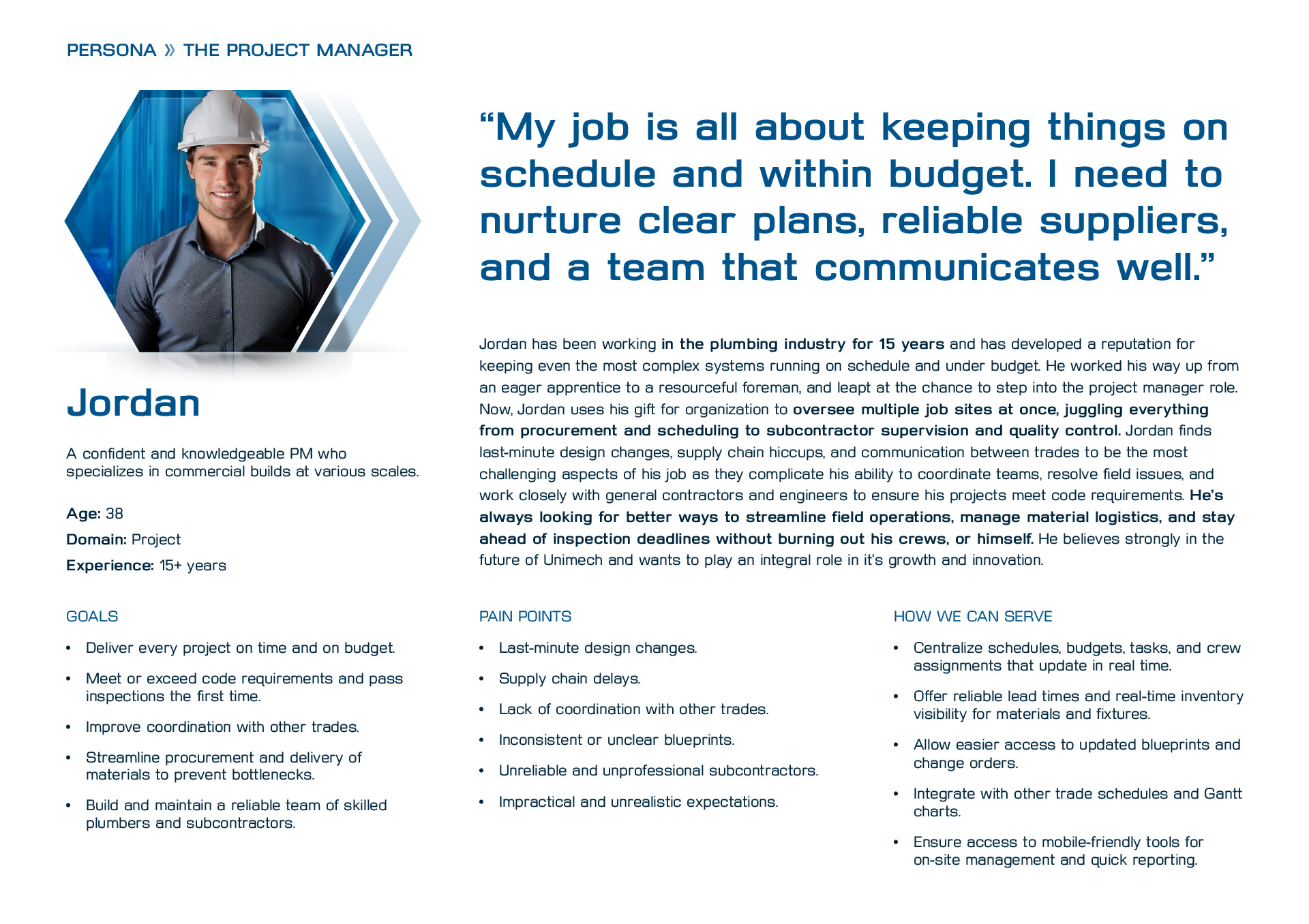
As you can see from the USP, the first issue was that Unimech had no clearly defined job roles or expectations. Staff operated based on assumptions, necessity, experience, or history, resulting in communication breakdowns, operational inefficiencies, and staff dissatisfaction. Jug had already recognized and prepared for this issue during the research phase, now it was just a matter of using the data he’d compiled to create a new organizational chart, followed by an internal user persona and story for each position.

INTERACTVE ORGANIZATION CHART

An interactive visualization of Unimech's organizational chart. Created in Adobe Animate and implemented as an HTML Canvas graphic, you can interact with the "Toggle Phase" orbs to view two additional levels of scalability.

After the organizational chart was finalized, Jug crafted a series of internal job personas and stories to define, document, and communicate Unimech’s job roles and expectations in an engaging way; which started to set the company’s tone. The personas had three primary versions:
  1. Detailed Version - For use in organizational initiatives, strategy, and recruitment.
  2. Overview Version - For quick reference use, onboarding, training, and reinforcement.
  3. Poster Version - For use to promote presence and culture.

PM USER PERSONA: DETAILED

Detailed Version - A detailed version of a user persona for Unimech's Project Manager persona "Jordan".

PM USER PERSONA: OVERVIEW

Overview Version - An overview version of a user persona for Unimech's Project Manager persona "Jordan".

PM USER PERSONA: POSTER

Poster Version - A poster version of a user persona for Unimech's Project Manager persona "Jordan".

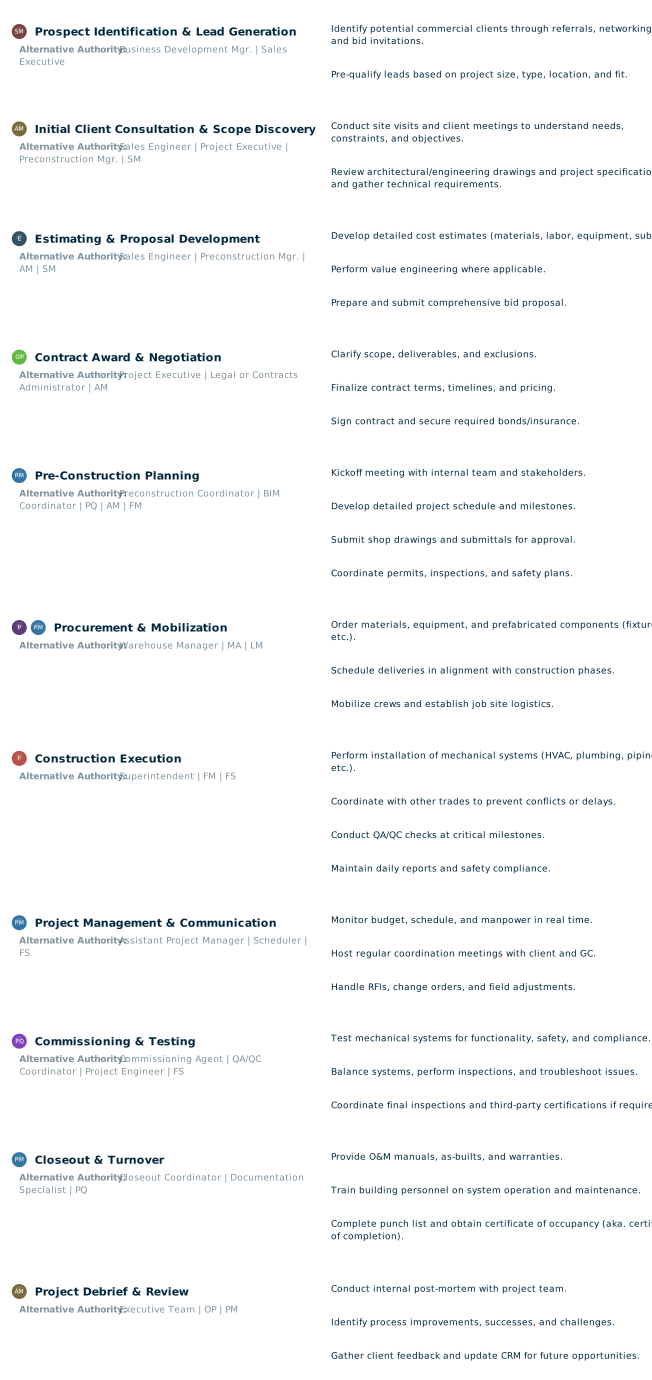
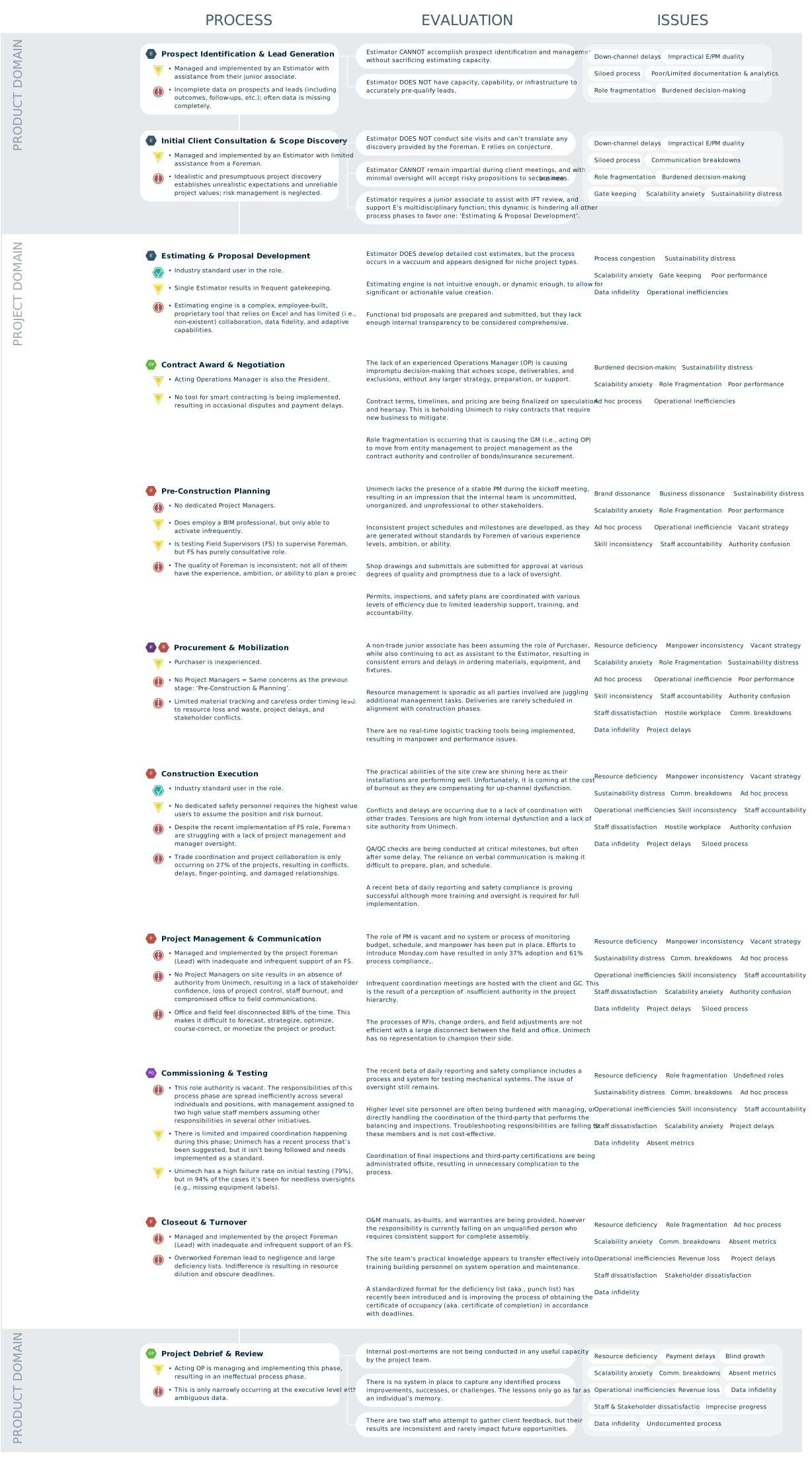
Next, Jug continued to expand on the user stories by documenting the detailed user and process flows of Unimech. He’d already accounted for and validated contradictions, gaps, inefficiencies, and differences between the role expectations of Unimech’s staff by using industry standards to create the stories. Now, he’d use the same tactic to develop a sustainable, adaptable, and scalable process that would prepare Unimech for the following market tier and be detailed enough to blueprint their proprietary technology. You can toggle the processes below to compare the two processes.
A comparison between a simplified process map of the averaged industry project process and Unimech's own discovered project process. Click on the titles above to toggle and compare between the two process versions.

THE UNIMECH BRAND
Although Jug’s research identified that Unimech’s brand wasn’t a direct issue to the external success of the company, there was significant enough data to show that it was having a detrimental effect on the internal staff. Without a cohesive identity, Unimech couldn't seem to synergize its team on site or across office and field; it was determined that this would remain Jug's secondary focus until a letterhead, business card, apparel, website, and overall brand guide could be completed.
Despite Unimech having updated its logo and name following its acquisition of Universal Mechanical in 2018, minimal steps had been taken at the time to create a proper brand, and the process had stalled shortly after a tradename and icon were created.
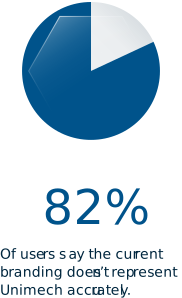
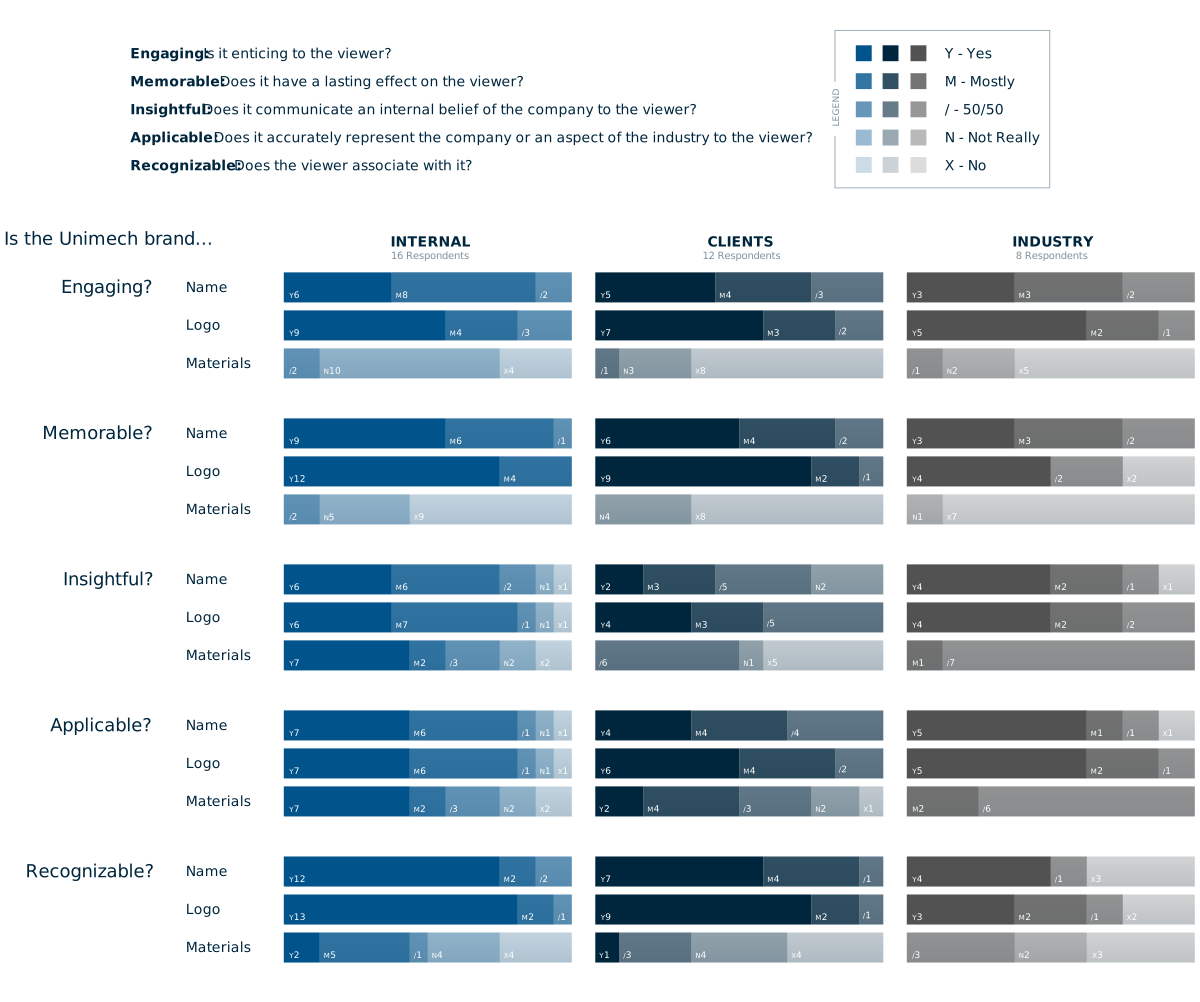
Jug picked up where the past left behind, first proving a positive internal response to the name and icon through his survey data, he reinforced the data with a positive external response through additional client interviews and industry personnel polling, confirming that the market showed no issue with using the name and icon as a foundation, and even encouraged its use after indicating the existence of some brand recognition. The logo and name were being recognized; it was the emotions it evoked that were proving generic and anecdotal; the goal was to build a unique identity around the existing tradename and icon.

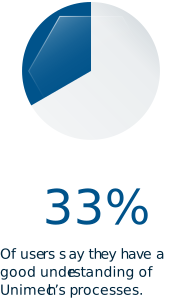
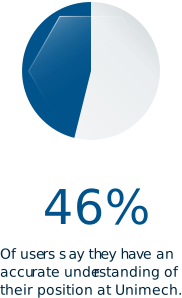
BRAND SURVEY RESULTS

A visualization of the results of an internal brand survey that informed the direction of Unimech's branding initiatives.

PROPRIETARY TECHNOLOGY
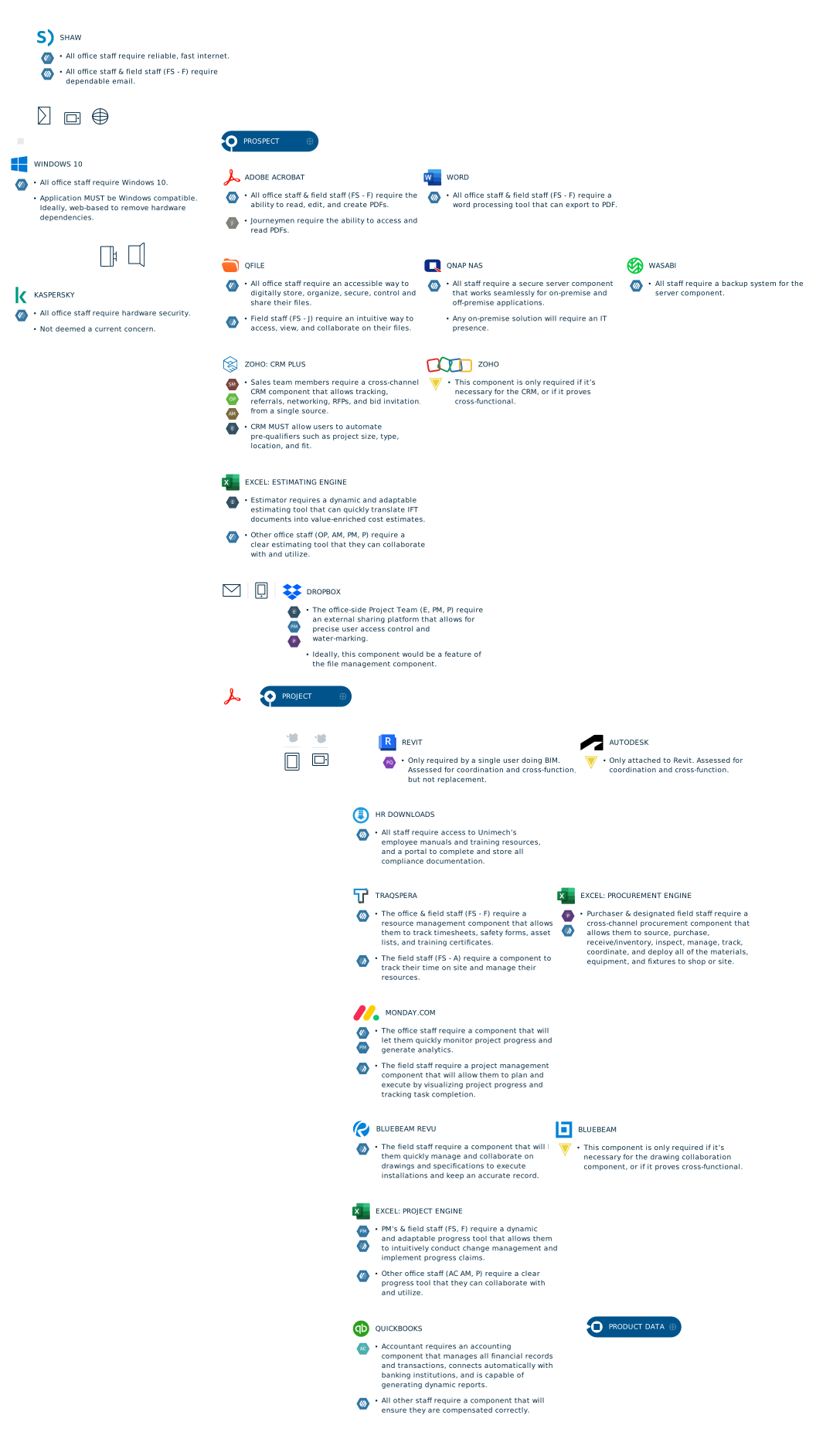
The remaining issues identified by the USP (those labeled short-term priority) were addressed by the third part of the plan: creating Unimech’s proprietary technology. Armed with the initial research, Jug planned to continue assessing Unimech’s technology requirements, optimizing current solutions or adopting better ones, and validating the creation of Unimech’s custom system. Jug used his ERP research to create a feature list that established benchmarks for a complete system, which he modified based on his application analysis and process and infrastructure discovery. The project management software continued to be assessed to provide deeper insight into the UI and UX development through continued usability assessments (which Jug implemented throughout his application analysis). A modified data flow was merged with user flows to create the ideal interaction map.

INTERACTION MAP

A portion of Unimech's interaction map, detailing the proposed user activity and data evolution produced by the estimating and project management engines.

This interaction map identified the criteria used to select the applications of merit that would be included as components in Jug’s API integration. Each application would be chosen to minimize the requirement for development as much as possible, with the secondary goal of reducing the number of applications involved in the interim technology. To complete this task, Jug needed to research each candidate and examine: the functionality being offered, the level of access, and the interface capabilities for integration. The most efficient (and agile) method was to verify each software’s API functionality by researching their API guides and sequencing the data into a code storyboard of the finalist applications, which would later be used to mock up the solution.

INTERMISSION

I can't show the story board directly, but here's an illustration to act in contingency for your enjoyment. (Even the most fascinating plays benefit from an intermission).

Before we shift into the solutions that our plan intended, let's take a look at some of the obstacles that confronted us.

THE OBSTACLES

As the project progressed, many obstacles came along Jug’s way. Data dissonance, toxic staff, an acquisition, a new brand, and scope variability fueled by client ambition were a few of the particularly challenging ones.
DATA DISSONANCE
Unimech had grown quickly since 2018 and found success before they were prepared for it; this left them overwhelmed by the immediate interests of their clients and unaware of the deficiencies building up that would compromise their future.
By the following year (2019), when Jug was brought into the project, Unimech had no consistent process, document, technology, or vision to leverage; there wasn't a sufficient precedent to establish routines, and every data point required validation while under constant change. To overcome this obstacle, Jug began to catalogue all data points into spreadsheets under the following categories: tasks, documents, technology, data, and knowledge; with each known variable being compared against industry standards, and all unknown variables being placed in a category, evaluated using a dependency criterion to authenticate qualifiers, and assigned a score of 1–3 to validate the data point's relevance, effectiveness, and necessity. Evaluators were then organized by job role, which allowed Jug to connect the data points back to the process and establish a quantifiable infrastructure.

TASK EVALUATION SPREADSHEET

An image of one of the evaluation spreadsheets Jug designed and implemented to capture and evaluate data points.

TOXIC STAFF
During Jug’s research, three individuals revealed themselves to be detriments to Unimech’s operations for various reasons. These individuals were in positions of authority and were covetous of their positions and respective power. Jug was required to cater to their egos and plan around their vanities (which included proving against invalid variables). Despite this obstacle, Jug was able to draw valuable insights from these individuals and used the experience to reinforce the necessity for collaboration points and oversight in Unimech’s operations.
ACQUISITION
The most significant obstacle came when Unimech suddenly acquired a sheet metal company called Movin’Air Heating & Air Conditioning Ltd. (aka. Movin’ Air) forty percent through the project. The acquisition included a new building that Unimech moved its operations into, which meant an entirely new ecosystem of people, processes, and technology. This obstacle delayed and reset the implementation of everything until the new acquisition could be included in the plan. Jug needed to repeat the research and planning process he’d just completed for Unimech and merge the latest findings into the work. The silver lining was that this new use case proved that Jug’s proposed solutions were adaptable and scalable.
THE FLOW BRAND
Another obstacle occurred shortly after the acquisition when Jug was tasked with developing a service brand for the newly merged company that would include residential clients. Jug repeated the research and planning process for a third time, including creating an additional brand to appeal to a residential market. From this, Jug gained an even greater understanding of every dimension of the industry.

FLOW WEBSITE

An archived (and sandboxed) version of the website that Jug created for Unimech's service brand, Flow Service Experts. You can click the "Unlock" option to browse from here, or click "New Window" to browse the site in its own window.

FLOW ADVERTISEMENTS

A quick and simple animation made in After Effects to help showcase three black + white magazine ads created for Unimech's service brand, Flow Service Experts. These ads were published in three issues of the monthly publication, "Great News Media".

Curiously, following the creation of the brand and early in the infrastructure creation process, Unimech’s service manager disappeared, leaving the initiative without a captain. Regardless, Jug was tasked with preparing the new brand for a new manager while including its manifestation in the primary scope of the project. This initiative would remain a persistent distraction for most of the remainder of the project.
A FINAL OBSTACLE
Although Jug is used to complicated projects, the scope variability of this assignment proved to be the greatest challenge; however, it was also the most educational. It was an important reminder that one person can’t solve every problem (especially in one project), and that it is paramount to respect the scope and sustain the role.
If we recall, Jug’s initial role was to create the plan, develop the product, prepare the strategy, and evaluate the performance. However, after each success of his creative and practical solutions to Unimech’s complex problems, every new initiative seemed to be added to his purview with expanded responsibilities until he was drawn into daily operations and direct implementation. This left him with less time to provide his expertise in the areas Unimech needed most, such as research, planning, and strategy. Eventually, he was acting as the implementing agent, a position his capacity could not sustain and contradicted his purpose at Unimech.
To re-establish his role and continue his original scope, Jug aligned his new responsibilities to the job roles he’d created, then delegated the proper ones back to the appropriate staff, which allowed him to qualify the existence of a position he’d included in his modified organizational chart and validate the necessity for a person to fill that role; he even included a quantified recommendation for the promotion. This, along with consistent project roadmaps and priority affirmations, worked to balance the implementation responsibilities so Jug could focus back on the appropriate solutions as much as possible.

THE SOLUTION

While the obstacles did their best to do what they do best, Jug continued to create solutions. And this project required many solutions (which is why I’ve included some of them in other sections); in hindsight, it could be argued that most of these solutions were "products" in their own right (especially considering the fluctuating scope), but they have been included here at this time as Jug and the client still viewed the proprietary technology as the end product that would combine everything, and all solutions here had been designed as interim or component to that aim.
THE DOMAINS
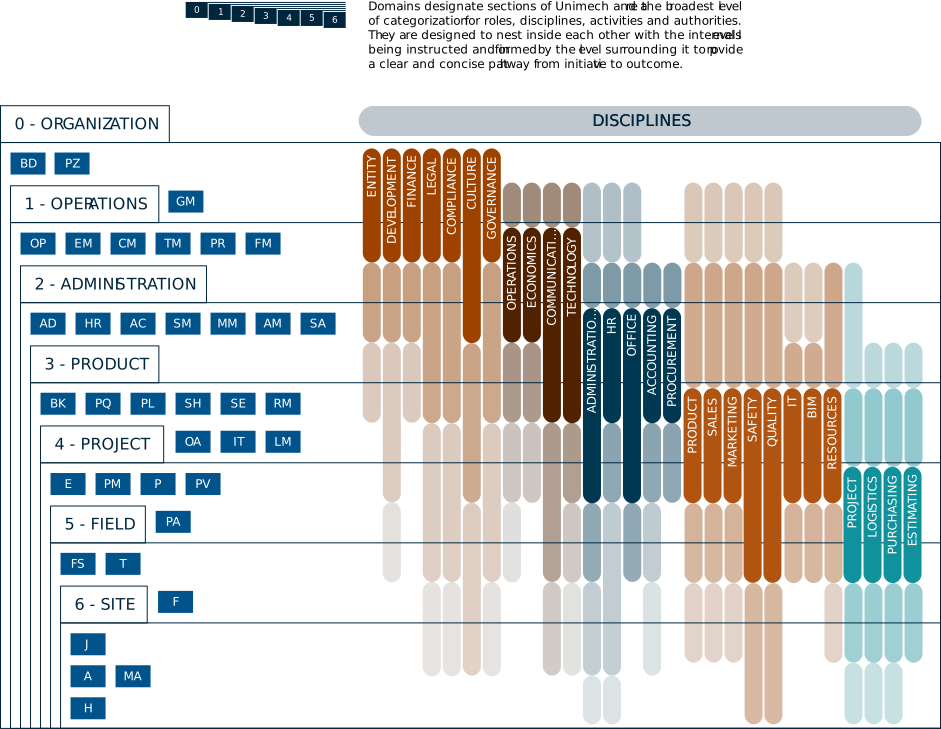
With the success of the sectors of analysis organizing Unimech's data, Jug used the same principles to organize Unimech's infrastructure and activities. Jug organized Unimech’s infrastructure into seven primary domains: Organization, Operations, Administration, Product, Project, Field, and Site. Each domain provided a top-down oversight of the domain that preceded it and held authority over a section of its own process, as well as a layer of the preceding domain's process. Inside each domain, Jug created meta-categories of reference called "Disciplines" to add internal structure to each domain's jurisdiction.

DOMAIN SCHEMA

A visualization of Unimech's domain schema with a sample of the meta-categories of focus (i.e., disciplines), and their influence across domains.

THE PARADIGMS
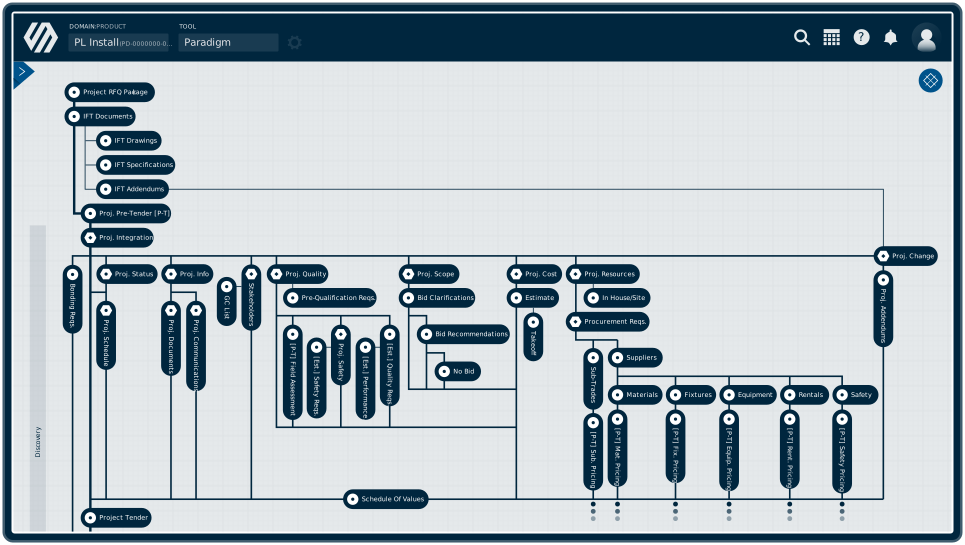
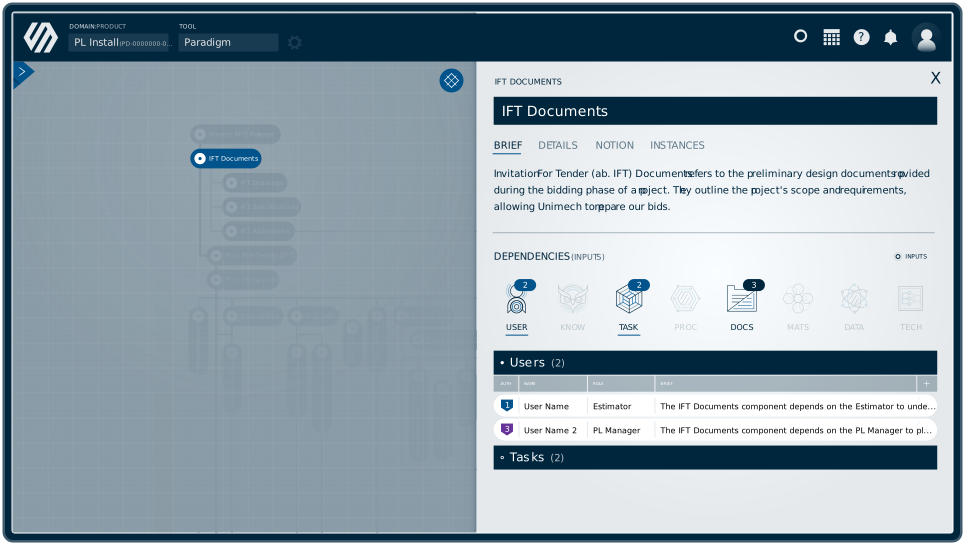
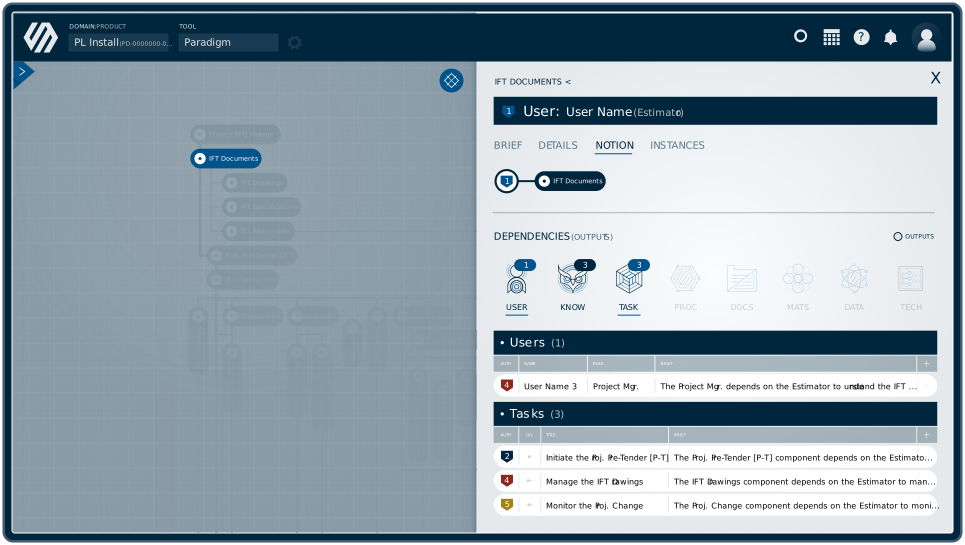
Each domain consisted of a standardized system of operation (or process) called a "Paradigm". The paradigms were designed to provide transparency to the Unimech system, present a standardized visual methodology, and bridge the translational gap between theory and practice. It had been uncovered that staff preferred reading and interpreting drawings over other applications; therefore, the paradigm was created to be graphical and the ideal interface to deliver Unimech’s new infrastructure system, control their operations, and manage the results. Job roles and expectations could be recognized, dependencies clarified, and authorities optimized through the graphical interface. With this foundation, Unimech would be prepared for the following market tier and beyond with a sustainable, adaptable, and scalable process.

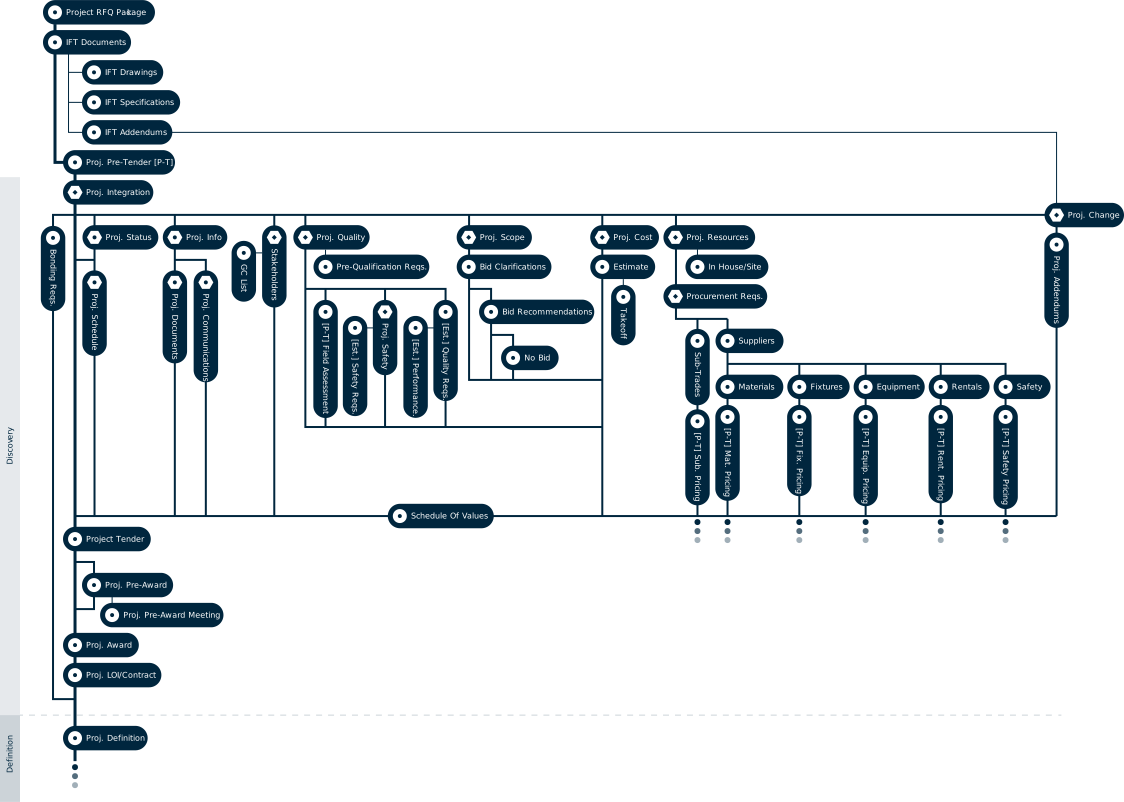
PROJECT PARADIGM EXAMPLE

Part of the project paradigm showing the 'Discovery' and beginning of the 'Definition' phase. These paradigms had the secondary purpose of mapping out Unimech’s entire operations to be translated into their proprietary technology.

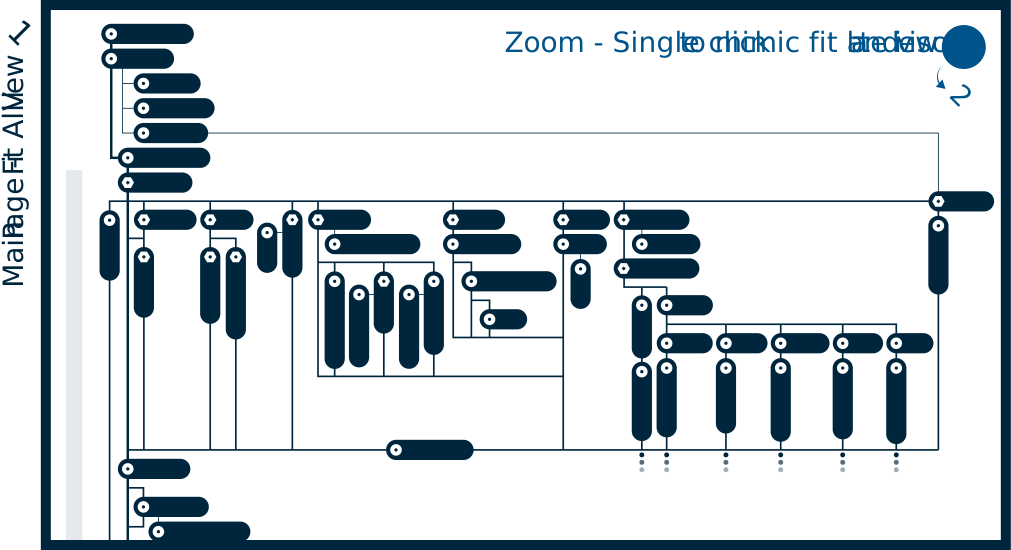
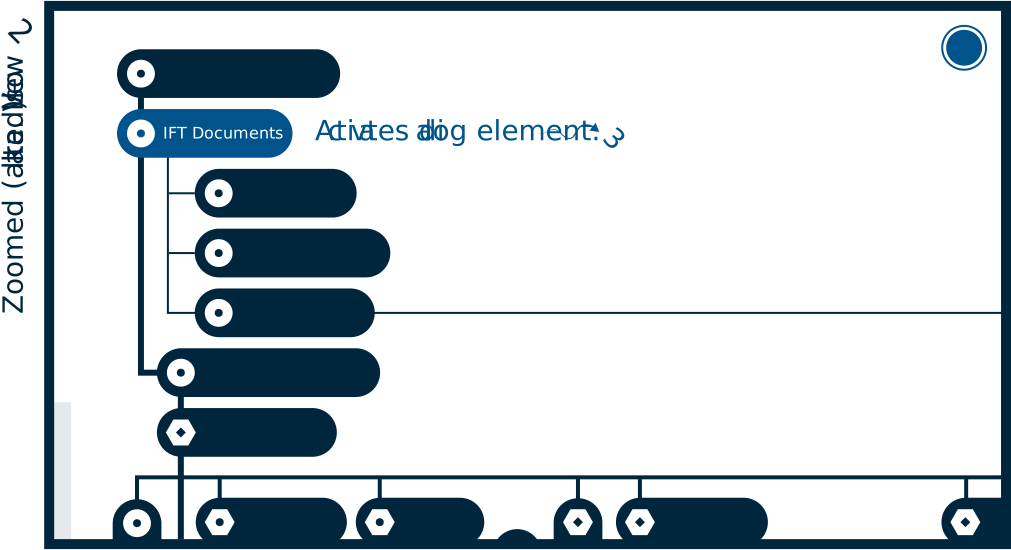
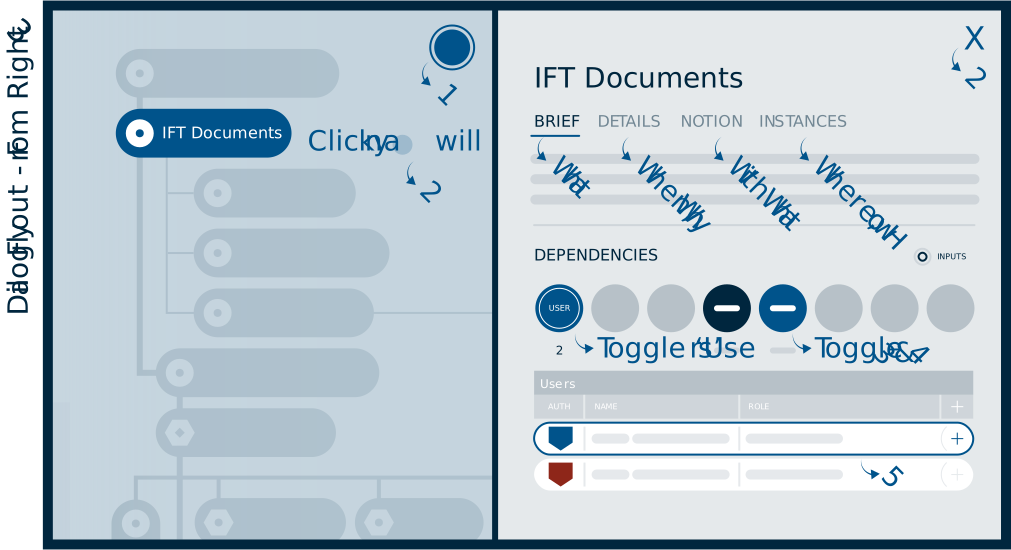
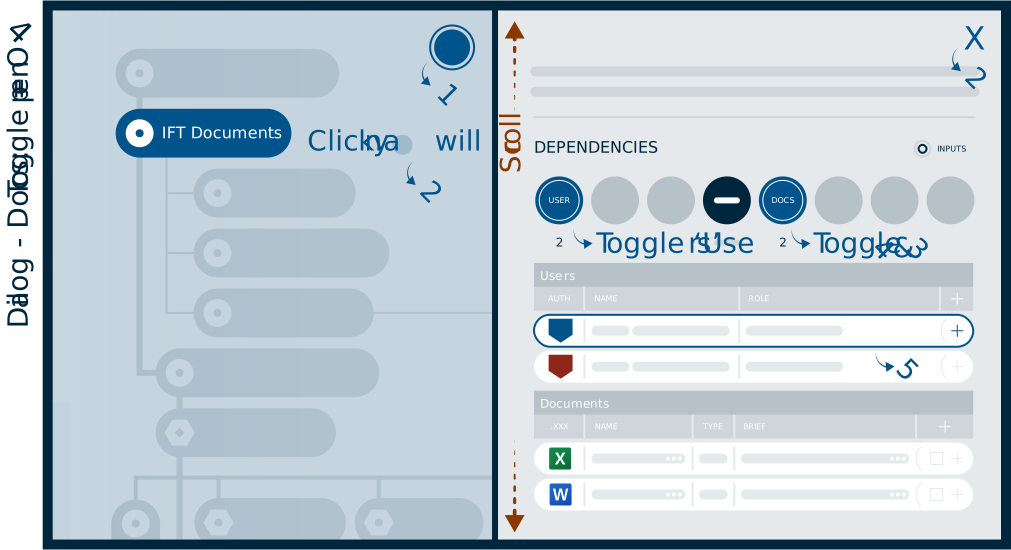
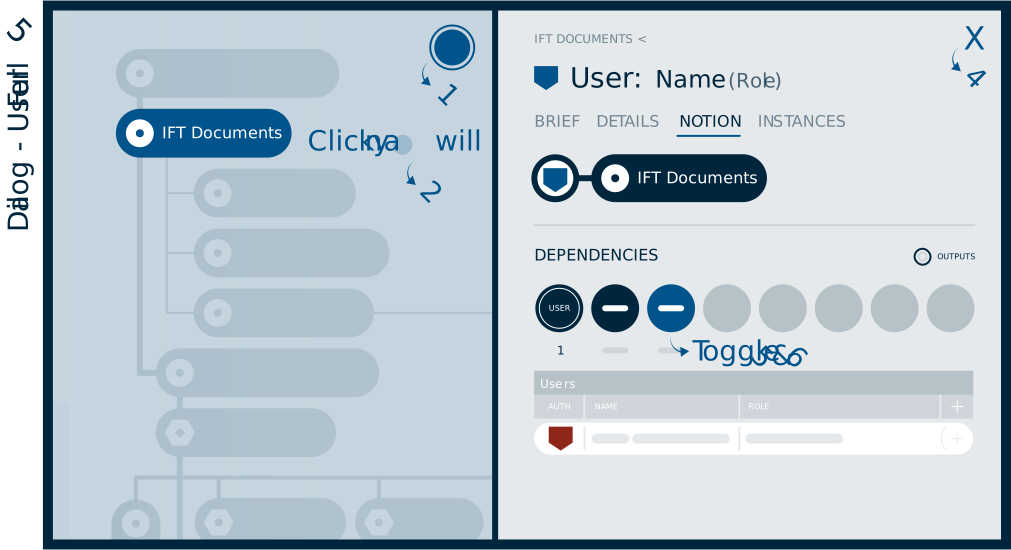
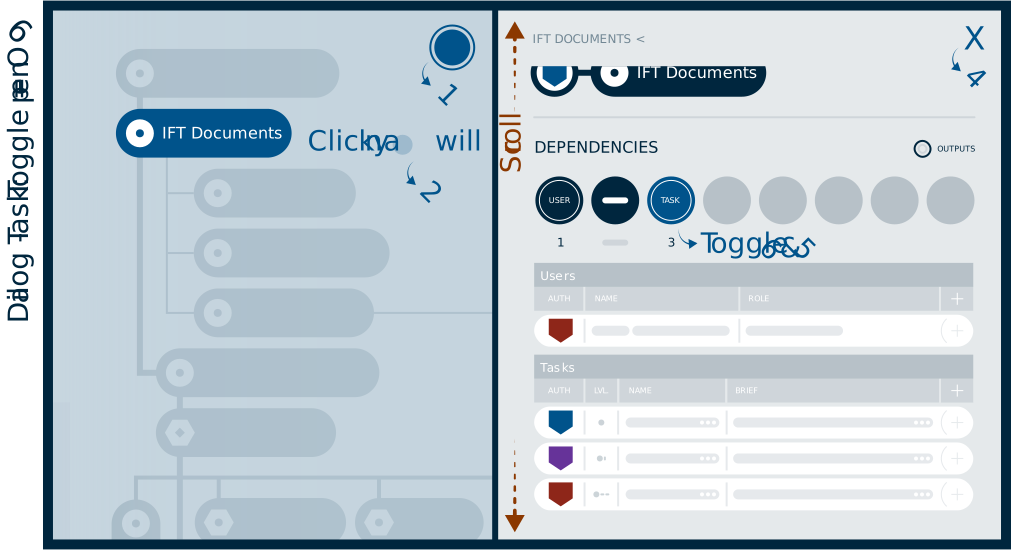
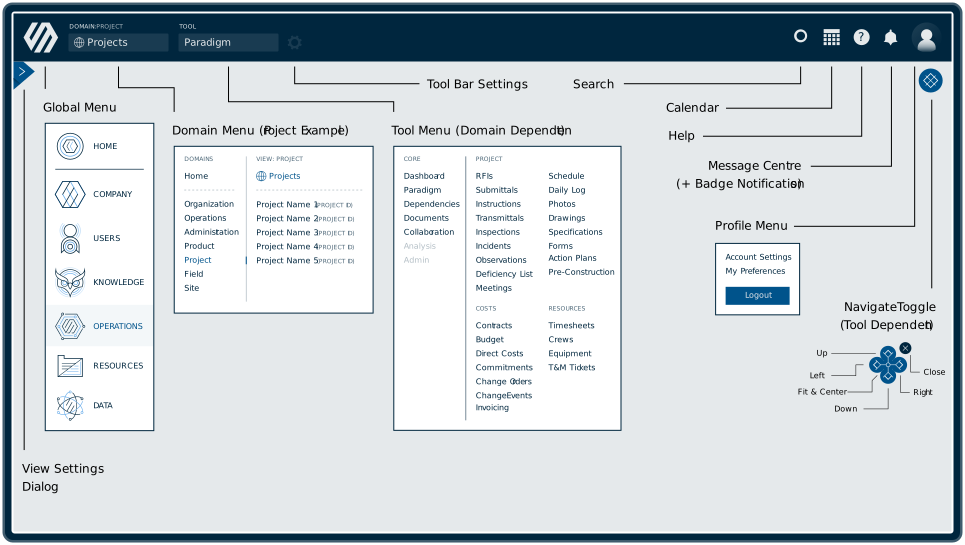
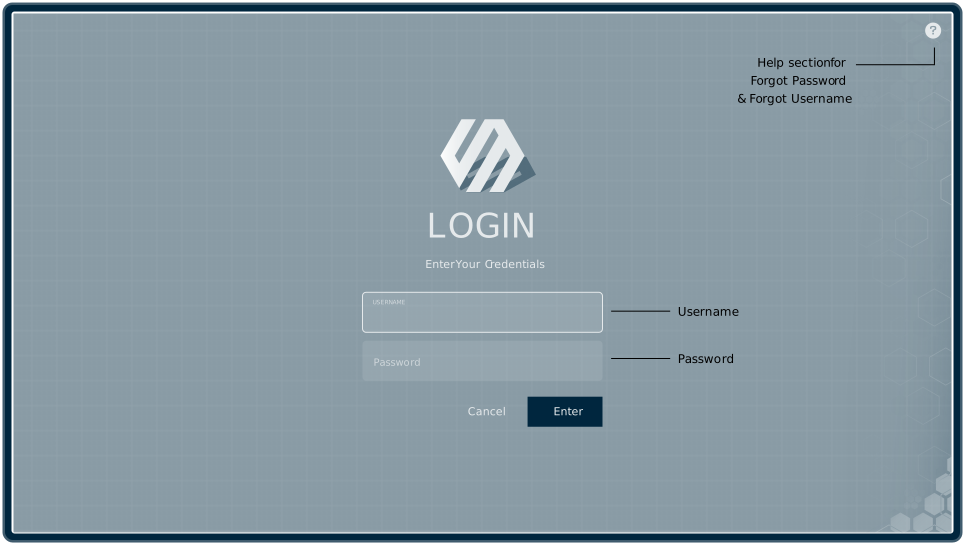
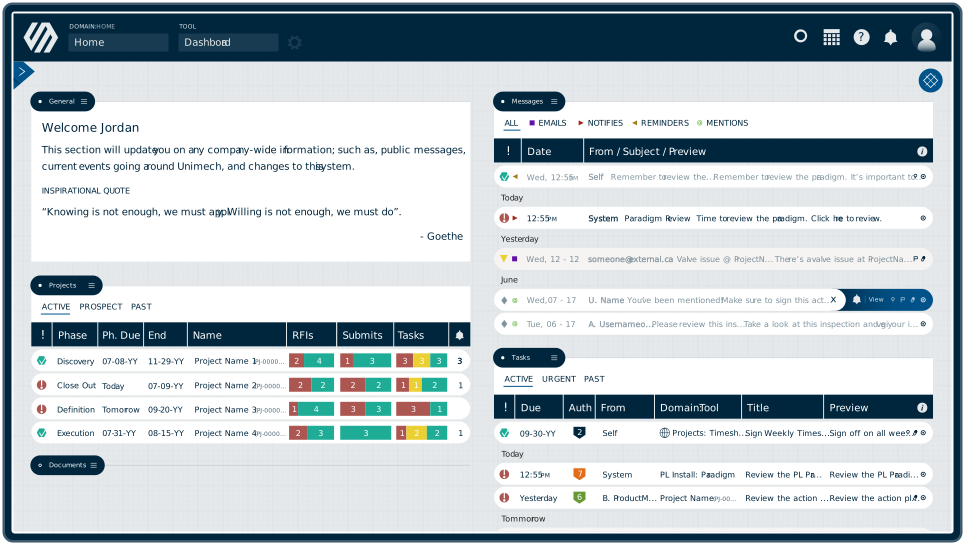
To fully communicate the vision, Jug ideated and sketched the features of an interactive paradigm—first in low fidelity, then through medium fidelity, in wireframes, with each successive stage refining the details, bringing more focus to each feature. He focused on a portion of the paradigm that would provide the clearest sample of the full paradigm’s potential while also providing a lesson in how the staff could interact with the static version at any point in their workflow. From the wireframes (created in Adobe Illustrator), Jug was planning on iterating a concept through Adobe XD, but (due to the overwhelmingly positive response to the wireframes) was instructed to focus on the next phase of the product prototype.

MIDFI WIREFRAMES

A sample of six mid-fidelity wireframes depicting the concept of an interactive paradigm application.

For the next phase of the product prototype, Jug focused on more detailed concepts without compromising simplicity, by keeping the same base aesthetic from the wireframes. The goal was to help users interact with the prototype with functionality in mind, rather than being distracted by the visual design. The prototype sample was initially intended to showcase the functionality for the three primary user groups: Manager, Executor, and Monitor; however, it was decided that the testing would focus solely on the Manager's experience. Users would interact with a part of the paradigm and experience how the system guided and informed each task of the project process while connecting with the global data and documentation.

MIDFI CONCEPTS

A sample of six mid-fidelity concept panels for Unimech's proprietary system. The panels originally featured definition and usage notes that have been removed for confidentiality.

THE BRAND
Meanwhile, Jug’s work on the Unimech brand continued, resulting in the following solutions.
The Unimech Logo
Jug started by cleaning up the logo to make it look more professional and modern. This included balancing the negative space of the icon and modifying the typeface to create a custom font, thereby increasing its presence and complementing the aesthetic. Unimech was all about innovating while maintaining first principles; the logo needed to reflect that balance while expressing exclusivity. Jug was able to skip ideation and sketching (typically found in this phase) as the existing icon and typeface served this purpose.

LOGO CHANGE

An interactive graphic created in Adobe Animate that lets you toggle between the original logo and Jug-revised version. Click on the image to toggle between the two states and see the differences (they are subtle, but necessary).

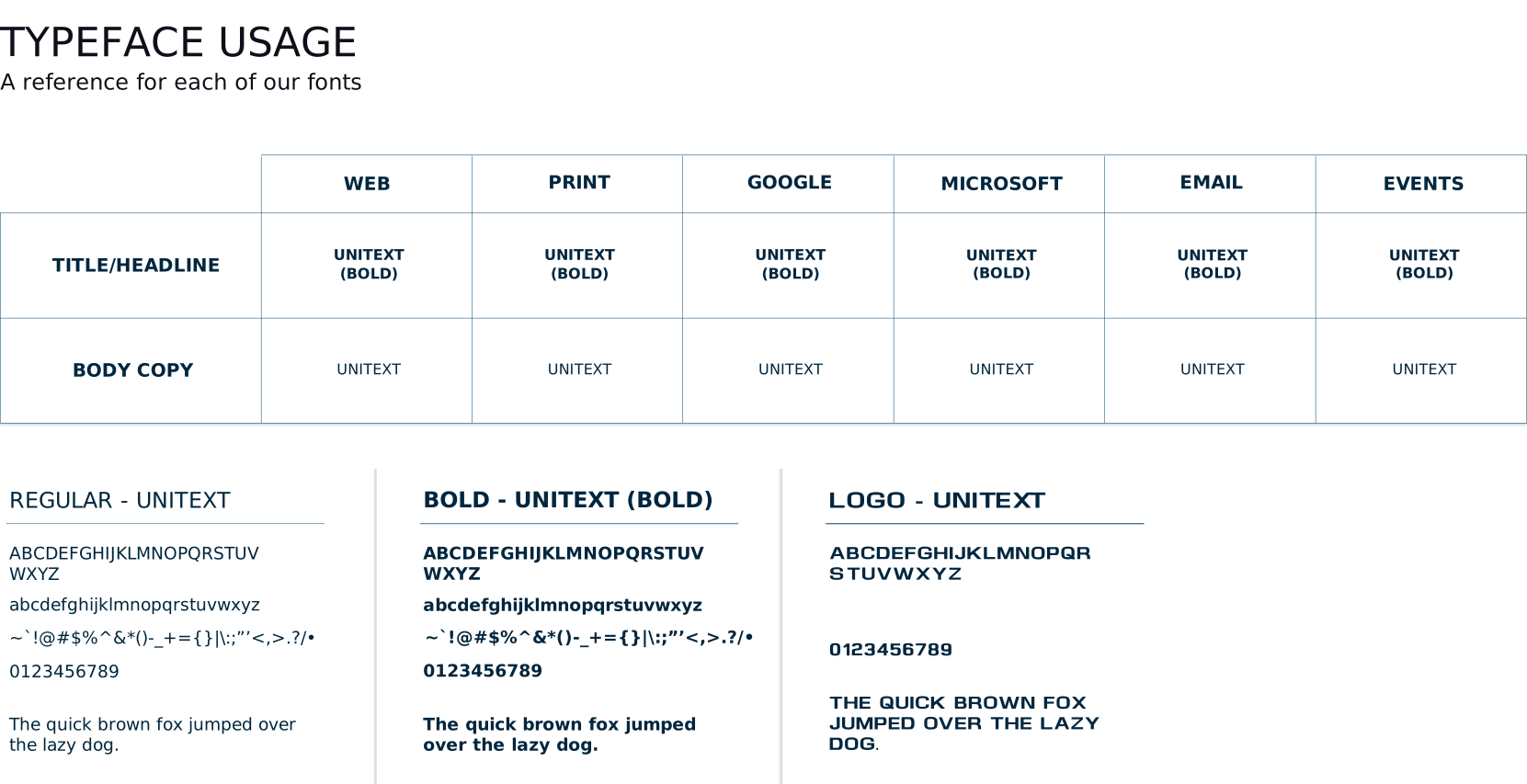
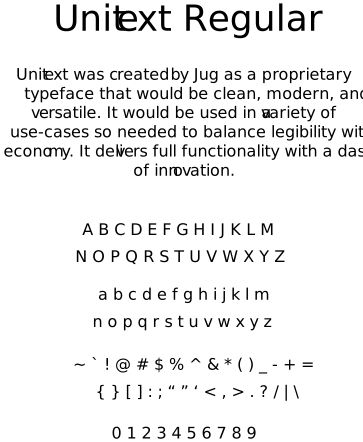
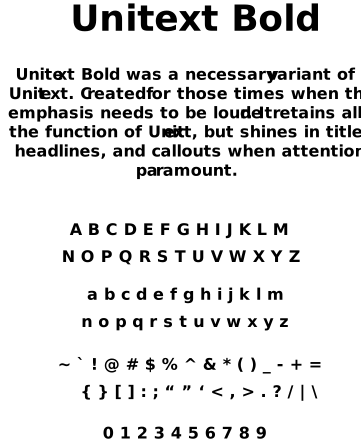
UNIMECH CUSTOM FONT

A font created custom for Unimech by Jug. It features two variants: regular and bold.

The Aesthetic
This is where Jug’s competitive analysis data revealed an interesting opportunity for Unimech to lean into a bold, disruptive, futuristic, and energetic style. The current peer group was full of the same carbon-copy companies, and the next market tier was more of the same. The industry had always provided opportunities for anyone who could do the work, so most were content with the status quo and a generational plan for growth. Unimech was highly ambitious, with a well-funded strategy, a stoic approach to risk aversion, and innovative ideas; they wanted to reach the next tier and beyond as quickly as possible, and needed an aesthetic that communicated this.

THE UNIMECH AESTHETIC: SKETCH

An ideation sketch of the Unimech aesthetic (with a splash of polish).

Jug sketched out ideas for a noticeable brand aesthetic unique to the industry that communicated to clients that Unimech knew something the competition didn’t. He included the hexagonal shape of the icon to create a honeycomb pattern that would connect Unimech with the efficiency, craftsmanship, connection, and dedication of a bee colony. He rendered the sketch with bright blue hexagon outlines to represent the energy, flow, and automation of Unimech’s process and evocative of the resources they serviced; further, he used outlines and strokes to function as windows to symbolize Unimech’s dedication to transparency and collaboration. More pixels could be spilled to uncover all the symbolism in the design, but let’s trust the aesthetic to speak for itself.
What do you see?
A video created in Blender to tease Unimech's new letterhead and business card design.

The Tagline
Unimech had already outgrown their previous tagline, “Your Go To Guys” and needed something more refined; a new perfect tagline was still required. It had to be quick and clean to reinforce Unimech’s craftsmanship; it had to be clever, but not goofy, to communicate Unimech’s positive professional energy; it had to reference what they did in a sophisticated way; and it had to deliver their philosophy of universality... After thousands of ideas, there proved only one clear tagline to connect it all...
With this tagline in place, every aspect of the Unimech brand began to "connect and flow" into the final elements of its identity.
The Presence
Unimech’s identity had been solidified as an innovative company ahead of the curve, which meant its online presence was crucial to its message and had to present the same unique approach. To this aim, Jug applied an interface layout original to the industry, evoking the drawings their clients were familiar with, reinforcing the automation of working with Unimech, and demonstrating sophistication with technology that promoted their proposition.

UNIMECH WEBSITE

An archived (and sandboxed) version of the website that Jug created for Unimech. You can click the "Unlock" option to browse from here, or click "New Window" to browse the site in its own window.

The Guide
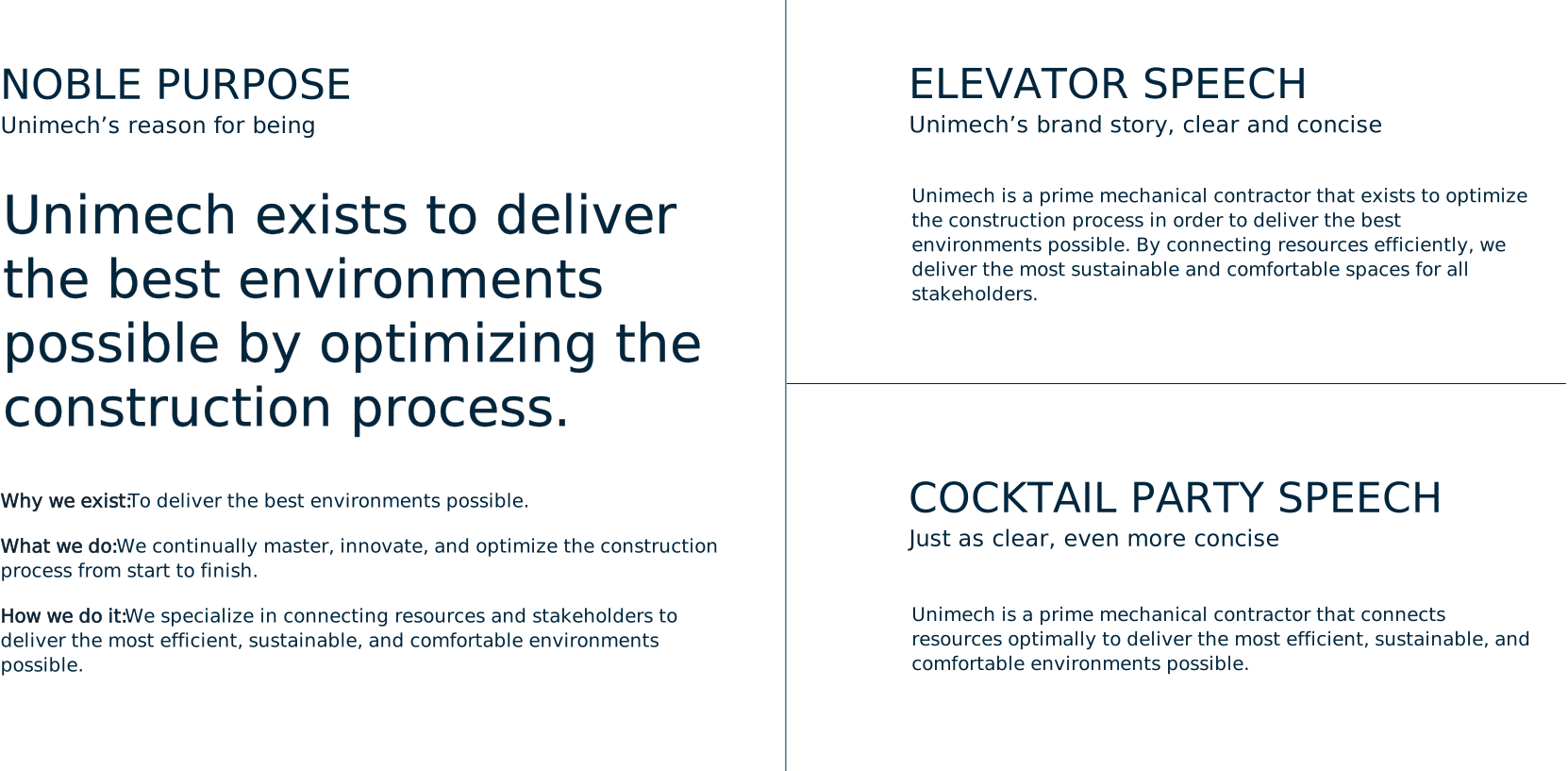
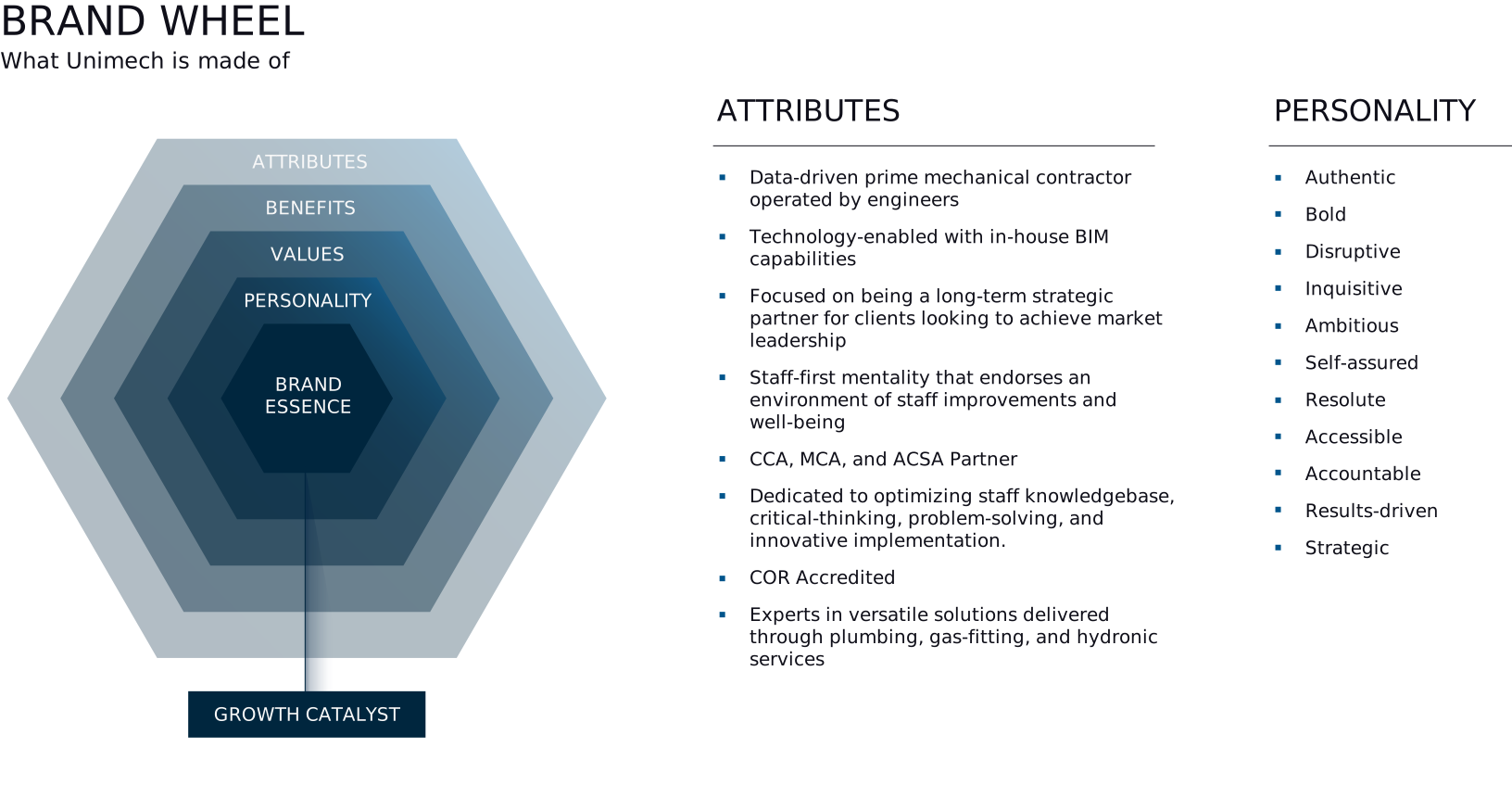
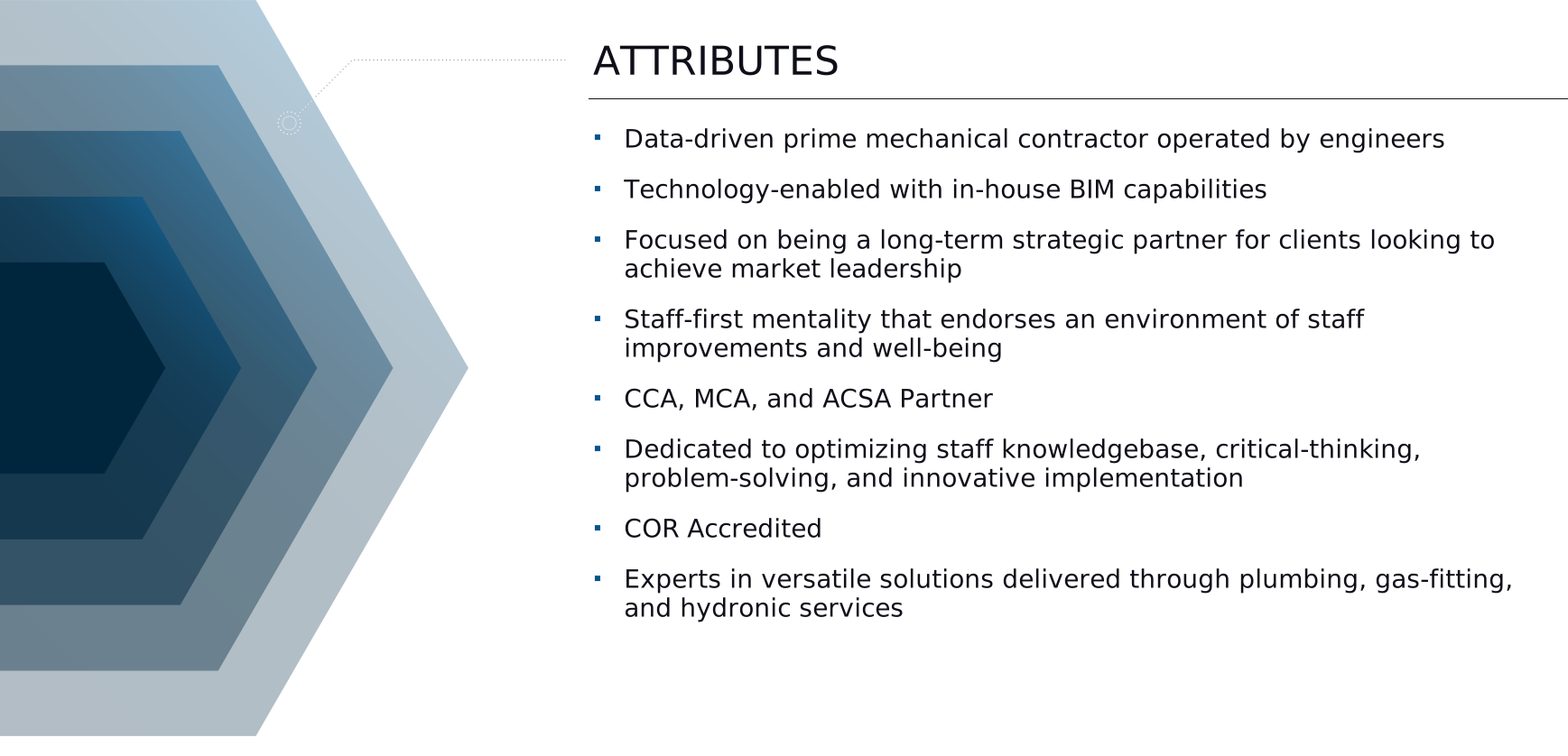
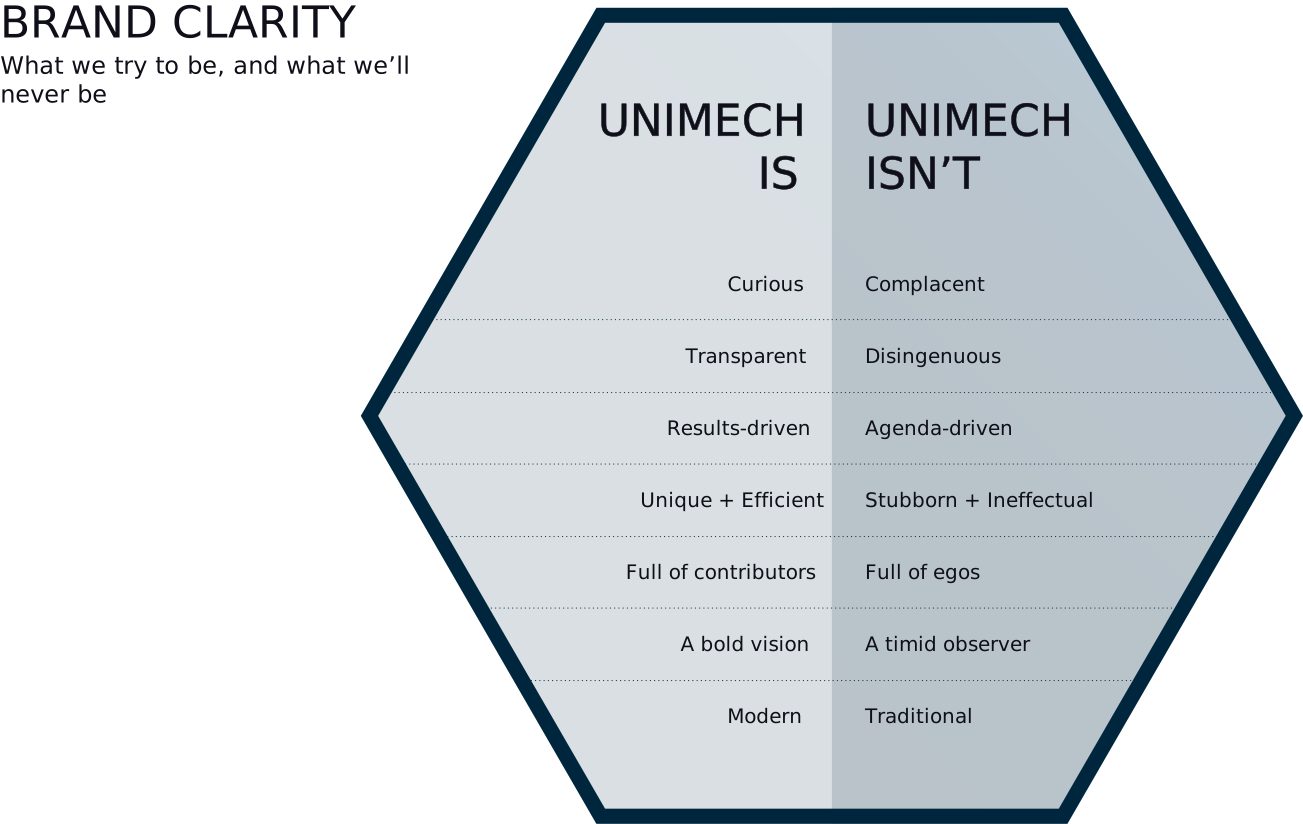
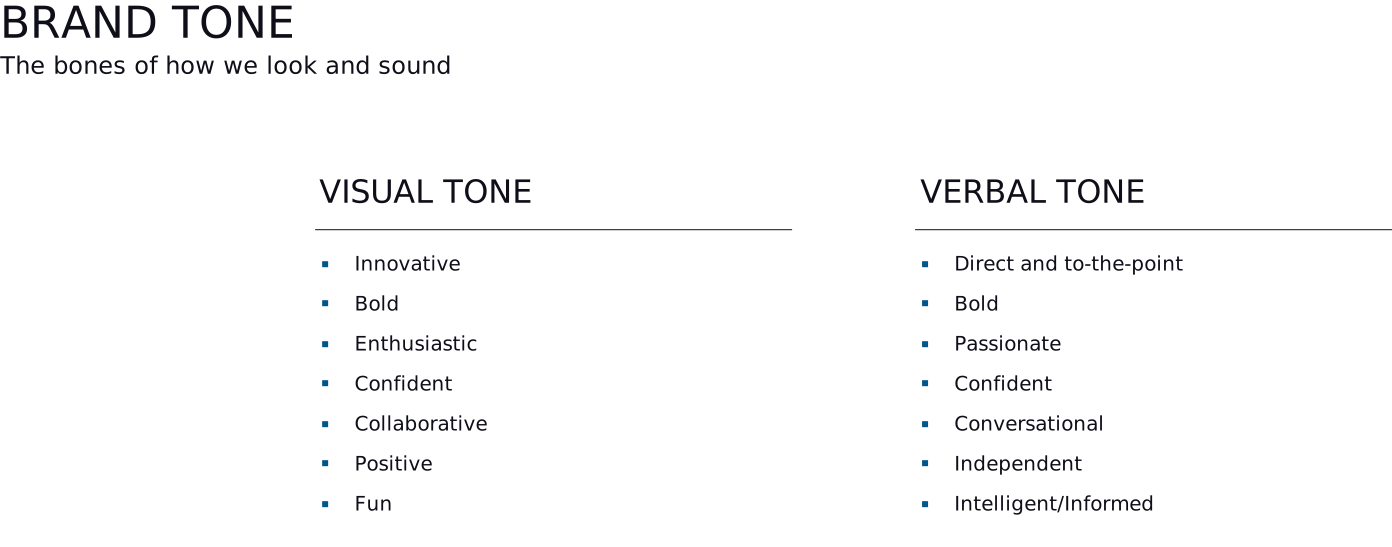
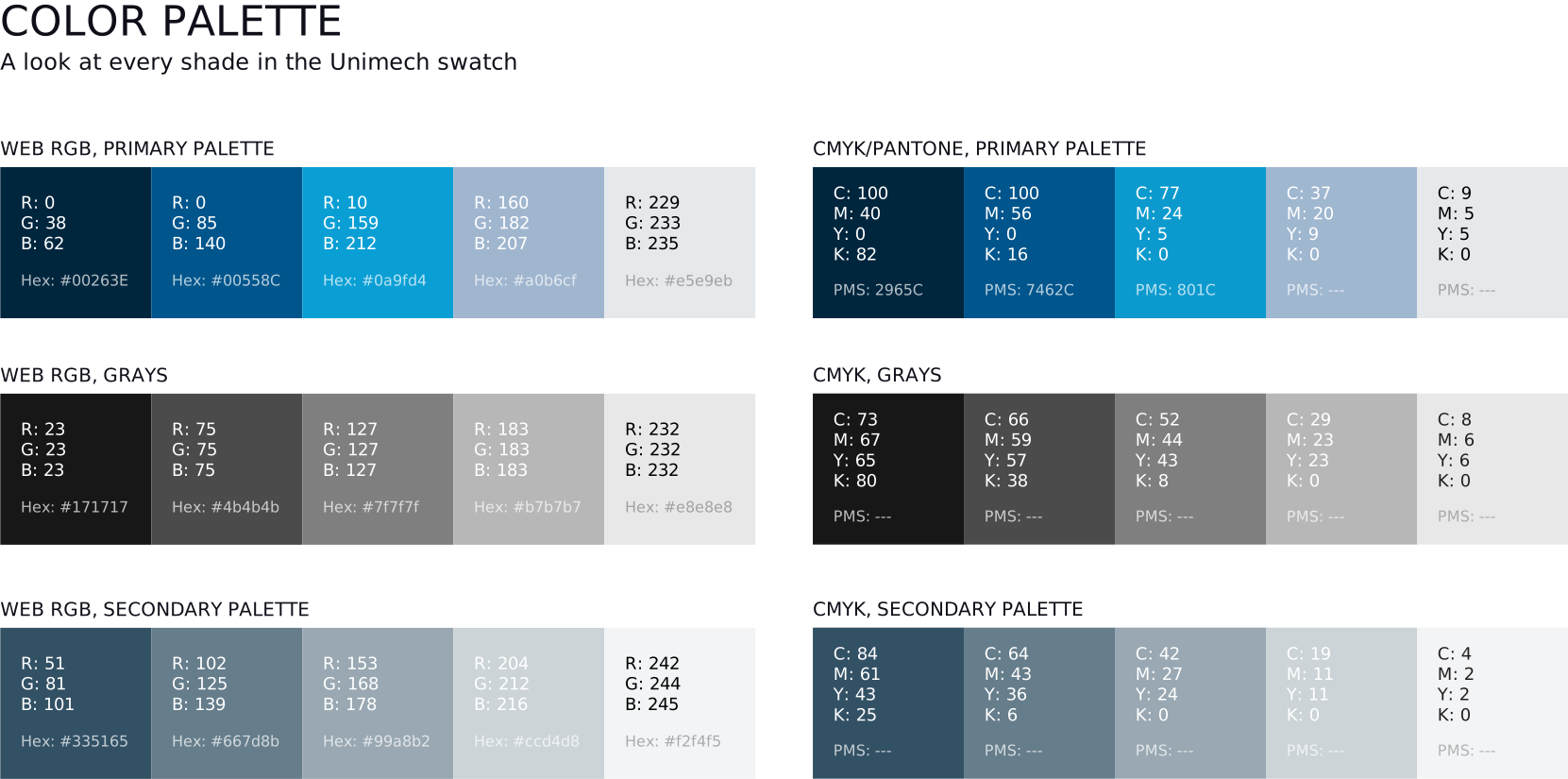
The final task under the scope of the brand phase of the project was preparing Unimech's brand guide. Jug had already uncovered the preliminary data for this during his initial research, strategically implemented it into identity components, and evaluated the staff, client, and industry response to an overwhelmingly positive reception. It was time to produce the guide and finalize the identity of Unimech.

A slideshow of Unimech's brand guide. You can cycle through the pages by clicking on the right or left of each page.

THE TECHNOLOGY
Before Jug could expand the code storyboard into a mockup of Unimech’s API integration, Unimech acquired the sheet metal company Movin’Air Heating & Air Conditioning Ltd.
Movin’Air's processes were already established and they had an existing technology stack in operation, which meant that Jug needed to repeat a version of his research and generate a consolidated plan. Unfortunately, the acquisition only augmented Unimech’s ambition. Jug’s task became a challenging combination of creating an implementation plan (which led to a strategy that Jug would be assigned to implement later) to apply Movin’Air’s technology across Unimech’s operations while assessing the viability of Movin’ Air’s technology to Unimech’s process, while also creating a new version of the API integration, and continuing to develop the prototype of Unimech's own proprietary technology product. You can toggle between Unimech's feature requirements and Movin'Air's to compare.

DIVISION PM TOOL: FEATURE PRIORITIZATION

A feature prioritization of Unimech and Movin'Air's technology needs. You can toggle between each division's prioritizations to compare their feature requirements.

If only it were that straightforward; however, Jug’s analysis indicated that Movin’Air’s requirements were much less complex than Unimech’s, so their systems would be an incomplete solution for both divisions. Fortunately, Jug was able to confirm some areas of compatibility that indicated that Unimech could still benefit from the migration without creating severe issues, so it remained prudent to continue the adoption and integration (which, at this point, would have only negatively disrupted Movin’Air’s operations to suspend). Jug’s solution became to leverage unutilized components of Movin’Air’s technology to initiate a collaboration platform that would act as a real-time monitoring system, implement a more efficient document management system, improve data fidelity, and support dynamic discovery. This would be accomplished comprehensively using Microsoft Teams, which could be introduced seamlessly into Movin’ Air’s existing Office 365-based environment. For this solution to work, Jug needed to:
  1. Refine his user management and document control concepts into the Teams framework.
  2. Prepare a layer of analysis to capture and track the user’s experience through the system.
  3. Establish the standards and policies that users would need to abide by.

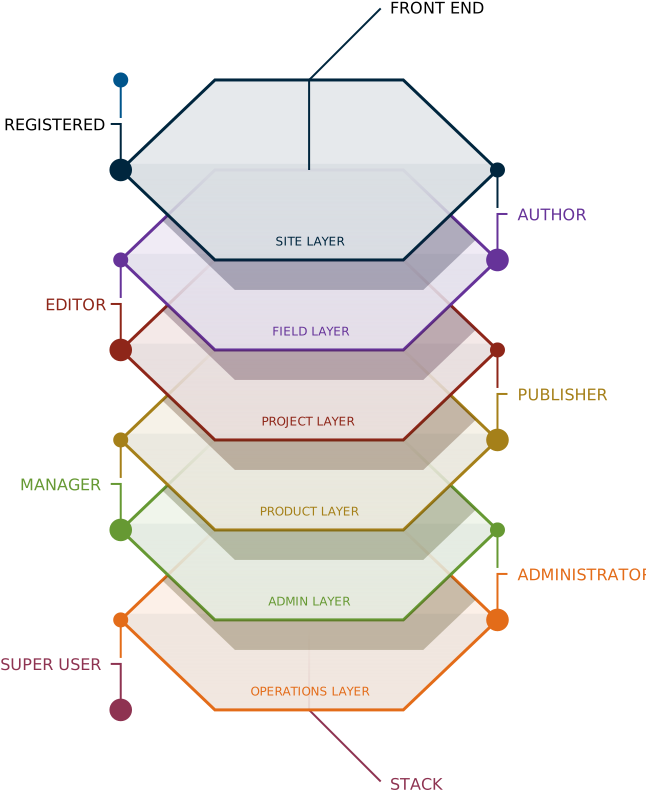
USER HIERARCHY METHODOLOGY

Registered Interface
SITE LAYER

Primary Roles:

J, A, H, MA

Permissions:

App Login | Edit Own

Author Interface
FIELD LAYER

Primary Roles:

FS, T, F

Permissions:

App Login | Edit | Edit Own

Editor Interface
PROJECT LAYER

Primary Roles:

E, PM, P, PV, PA

Permissions:

App Login | Create | Delete | Edit | Edit Own

Publisher Interface
PRODUCT LAYER

Primary Roles:

BK, PQ, PL, SH, SE, OA, SE, RM, LM, IT

Permissions:

App Login | Create | Delete | Edit | Edit State | Edit Own

Manager Interface
ADMIN LAYER

Primary Roles:

AD, HR, AC, SM, MM, AM, SA

Permissions:

App Login | Access Admin Interface | Create | Delete | Edit | Edit State | Edit Own | Configure Options

Administrator Interface
OPERATIONS LAYER

Primary Roles:

OP, EM, CM, TM, PR, FM

Permissions:

App Login | Admin Login | Access Admin Interface | Create | Delete | Edit | Edit State | Edit Own | Configure Options | Configure ACL | Manage Workflows | Offline Access

Super User Interface
ORGANIZATION LAYER

Primary Roles:

GM

Permissions:

App Login | Admin Login | Web Services Login | Access Admin Interface | Create | Delete | Edit | Edit State | Edit Own | Configure Options | Configure ACL | Manage Workflows | Offline Access | Execute Transition

An interactive graphic of the user groups and their associated layer permissions. You can interact with the plus symbols to see the roles and permissions of each layer

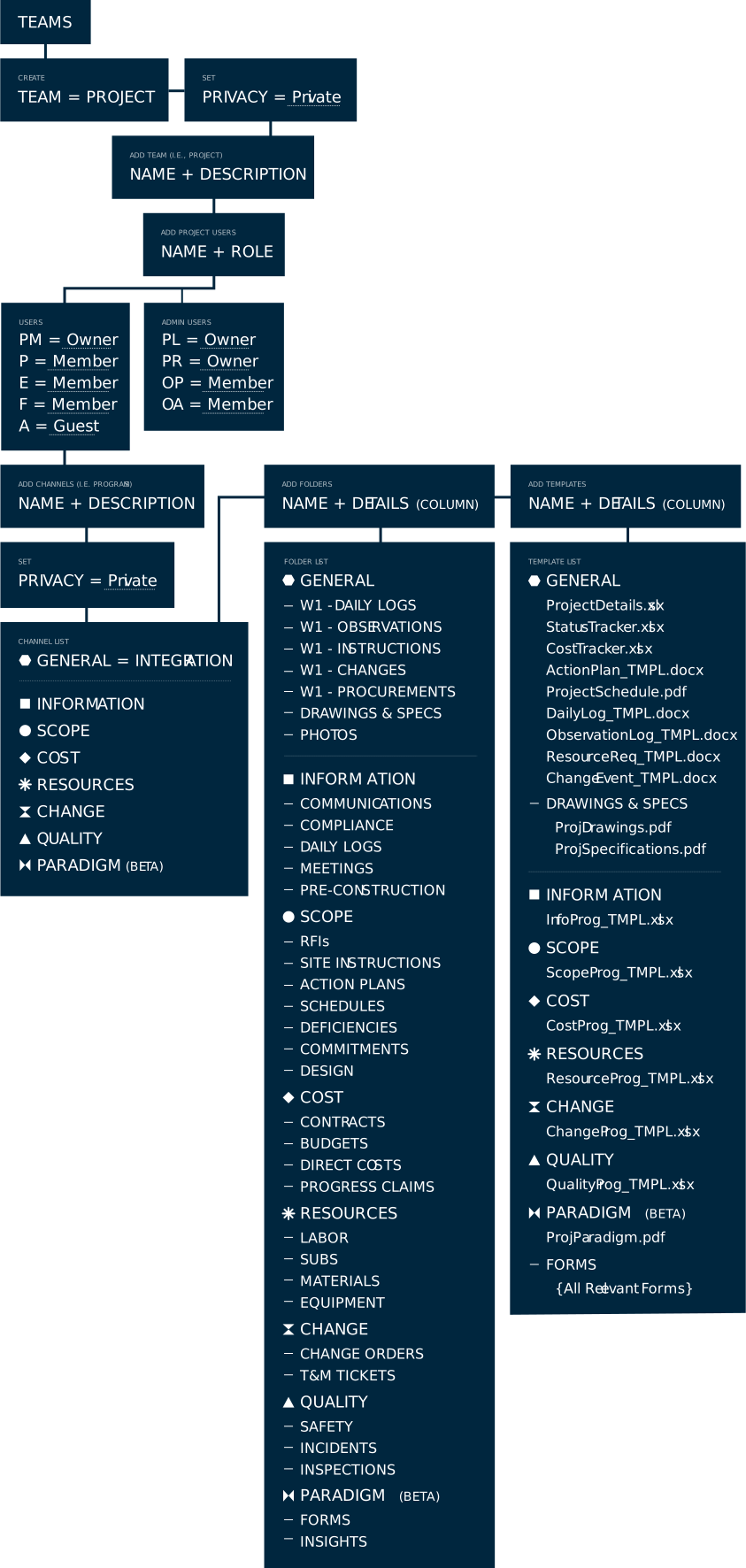
With Teams functioning as the main interface of Unimech’s system, Jug could focus on ideating and sketching how the other components could integrate. The goal remained to create something functional but not obligatory to serve as a prototype for Unimech’s paradigm system (which remained the vision). Jug set a Team as a sandbox to work on concepts, including mirroring a new project that was implementing his project paradigm. This would help establish usage and evolution while providing a non-disruptive test case. Jug also used a similar approach to track a recent project that hadn’t implemented the paradigm (more on this later). By using this process, Jug validated the solution while informing his prototype.

TEAMS METHODOLOGY

A schema depicting a representation of a Unimech project managed through the Team's interface. You can expand and collapse it by toggling the Expand/Collapse button.

At this point, enabled by Jug’s work, Unimech had already leapt confidently into the next market tier (a risky but calculated decision by Unimech’s stakeholders, considering the solution for sustaining that market tier had not yet been tested and finalized). Unfortunately, this decision would prove precarious, as a bombshell was about to emerge in the next phase that would change everything.

THE TESTS

As Jeremy dived into his three avenues of testing (user, market, and functional), the final insights of his concepts were revealed, validating most of his expectations (along with one we both hoped he'd be proven wrong about, the previously alluded to bombshell).
Before I blow up this analysis, I’ll momentarily hold on to the bombshell and give the other remaining initiatives some closure (feel free to skip ahead)...
For anyone who hasn't skipped ahead, here is a dramatic graphic of what the project was about to feel like…

DRAMATIC SEGUE
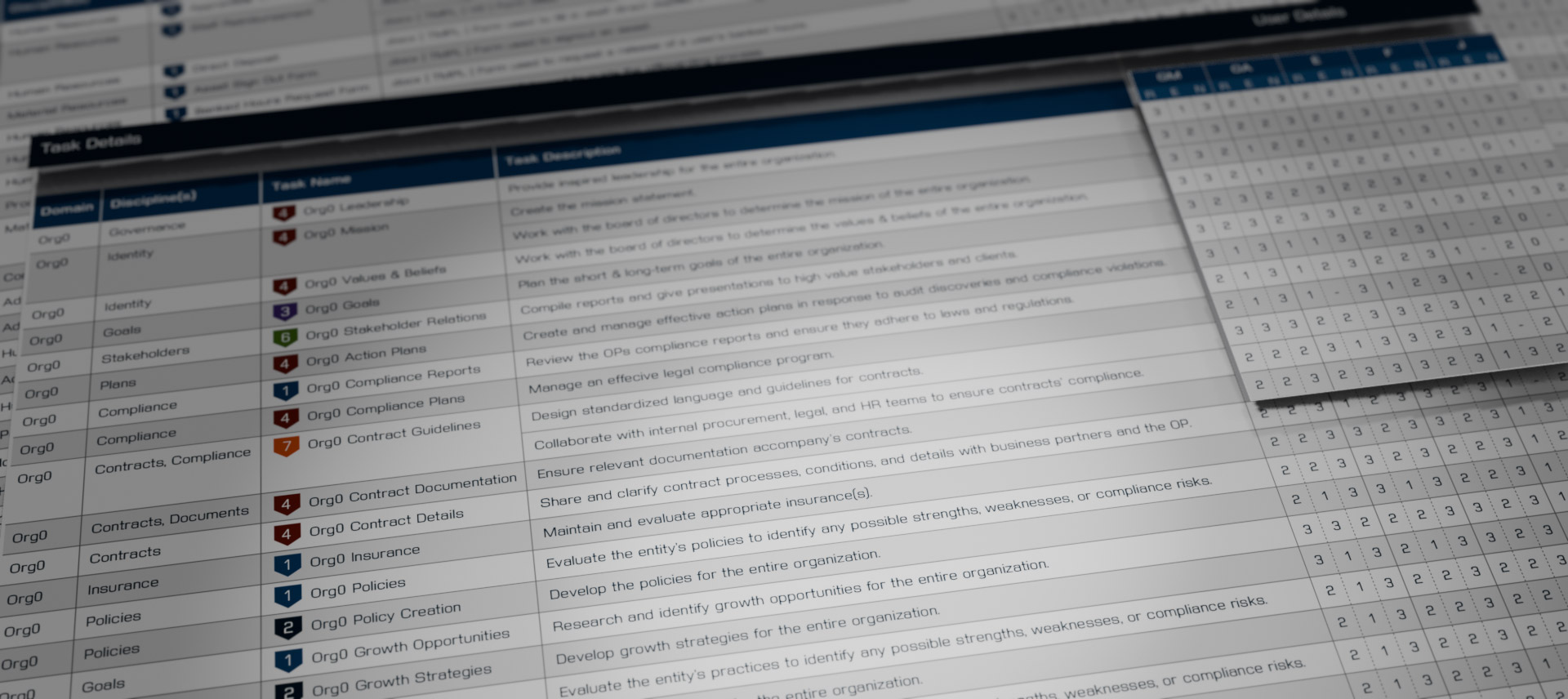
This is what the project had started to feel like. Each ball represents a facet of the project (Paradigm, Brand, and Technology).

USER TESTING - THE STANDARD
The first big striped ball to be removed from the equation was our project paradigm prototype sample that users were testing.
Jug’s goal in user testing was to have the user successfully navigate the concept, interact with all experience triggers, and confirm readiness for the next task in the process.
The user would be presented with a screen loaded with the prototype, and their experience would be monitored.
Jug told the user: “We are testing a section of the project paradigm prototype. The features in this prototype are planned to be extended through the product. The system is designed to streamline the project process by providing a comprehensive toolset with all relevant project information and status at your fingertips. We noticed that the project information was convoluted and incomplete, which was affecting the quality of our product. The hope is that this will help us be more efficient, get our projects done quicker and more economically, and provide a tangible record of the project for evaluation and security.”

USER TESTING

Jug observes a staff member testing out the interface on a tablet. {I'd hidden the original of this photograph, but Jeremy managed to re-create it with deft skill using a combination of AI tools, manual modelling and texturing in Blender, and final compositing in Photoshop. I guess it'll provide a nice reminder of that cheap suit I had t-AI-lored in my youth. (Ironically, the reason I hid the original photo)}.

The first round of testing was interrupted by other initiatives, and only a few internal staff were taken through the test. Unimech directed Jug to postpone the testing as they wanted more focus on the other beachballs (and the ever-changing myriad of marbles). Still, Jug was able to document the following (albeit limited) testing results.
Testing Results
Jug had managed only three user tests. Two were project managers, and the third was the Field Manager (the highest authority for implementing the project process). They all tested the prototype and spoke about their initial impressions. This included further insights into the project paradigm itself.
From user testing, Jug planned on making a few alterations to the project prototype…
  1. The vernacular used in the field was polysemous, meaning several different terms were attributed to a single definition. This could make it difficult for a user to be confident they were viewing the correct information. Jug would plan to include these aliases in the support layer attached to the concept. This support layer would be populated by Unimech’s knowledge base (i.e., wiki).
  2. One of the Project Managers, despite loving the layout and design, found the volume of information on the interface to be slightly overwhelming at first; it was reiterated that the dashboard layers would be customizable by the user, and the current prototype was showcasing various options on a larger screen format. Jug intended to create a simplified version and test user preference for: scrolling, toggling visibility, and full design.
  3. Users struggled with the dependency concepts; confusing inputs and outputs, and questioning the practical applications of too granular a delineation. Jug planned to simplify the dependency method and definitions by a site > office focus.
MARKET TESTING - THE DYNAMIC

The second ball was a thorny (or spiky) one that kept getting blown back in by errant breezes (even if its existence was expected). I’ve connected it with the branding initiative, as the tests would be used to establish Unimech’s design system.
Unimech uses a lot of templates, documentation, and communications, so Jug created a series of five updated templates with the purpose of developing a consistent design system to augment the brand guide. The tests would establish the last standardized aesthetics, such as margins, fields, padding, etc., and provide use cases of the brand guide elements for further reference, which Jug would use to generate a design system allowing staff to modify their own documentation. Although Jug had scheduled this as a low priority in the project plan, the excitement of the new branding led to frequent requests for asset optimization before the design system could be generated.
Jug realized that the information generated by these requests—as inconvenient as those requests may be—was valuable. The tests could provide further insight into role efficiencies and provide immediate granular feedback on the merit of each asset. Each asset was sent to the staff member who requested the optimization with a small assessment and the results tracked through an optimization system.

Document Optimization System: INTERNAL

STATUS:Implemented

.pdf

Name

FILE NAME:

JobSiteJournal.pdf

ALIAS:

Job Site Journal

Location

PATH:

WIP/ProjectNameID/10 Quality Control

DOMAIN:

Project

Details

TYPE:

Form

FREQUENCY:

Daily

Usage

The Job Site Journal contains daily report forms and a weekly log. This document is used to track the progress of the job and any issues that are causing delays.

Notes

  • Notes haves been removed from this sample.

Changes

REQUESTED:

  • Apply new Unimech branding & design guidelines
  • Simplify and optimize
  • Review for digitization

REASON(S):

  • Synergy between all Unimech assets
  • Users are having difficulty completing daily reports

REQUESTER(S):

PL (Plumbing Manager)

Assessment

RATING:13/15

CLARITY (2)

4

NECESSITY (2)

5

EFFICIENCY (2)

4

STATUS:Beta

.xlsx

Name

FILE NAME:

ProjectContactInfo.xlsx

ALIAS:

Project Info Sheet

Location

PATH:

WIP/ProjectNameID

DOMAIN:

Project

Details

TYPE:

Form

FREQUENCY:

Once

Usage

This document is used to record all stakeholders attached to the project and their contact information. It includes all relevant contact information for each stakeholder and their representative.

Notes

  • Notes haves been removed from this sample.

Changes

REQUESTED:

  • Apply new Unimech branding & design guidelines
  • Improve layout
  • Review for digitization

REASON(S):

  • Synergy between all Unimech assets
  • Users aren't filling in the document efficiently, or at all
  • Users find it tedious to fill in the information

REQUESTER(S):

PM (Project Manager)

Assessment

RATING:--/15

CLARITY (1)

4

NECESSITY (1)

5

EFFICIENCY (-)

--

STATUS:Pending

.xlsx

Name

FILE NAME:

ProgressClaim.xlsx

ALIAS:

Progress Claim Tracker

Location

PATH:

WIP/ProjectNameID/09 Billing

DOMAIN:

Project

Details

TYPE:

Form

FREQUENCY:

Monthly

Usage

This document is used to track monthly project costs as they pertain to material, labor, subcontractors, and change orders for the purpose of generating progress claims for billing.

Notes

  • Notes haves been removed from this sample.

Changes

REQUESTED:

  • Apply new Unimech branding & design guidelines
  • Review the attached systems populating the document
  • Improve the layout
  • Optimize to findings
  • Merge it with Movin'Air's version

REASON(S):

  • Progress Claim deadlines are getting missed
  • Project progress seems clandestine
  • Budget concerns

REQUESTER(S):

OP (Operations Manager)

Assessment

RATING:13/15

CLARITY (1)

4

NECESSITY (1)

5

EFFICIENCY (1)

4

A sample of an interactive reference system that Jug developed to keep track of document optimizations. You can interact with each card for its assessment information

If the document passed the assessment, the staff member would implement the document with the following communication: “Hi {insert receiver name}, I’ve attached the {insert document title} for your review. We’re testing a new format for this document and would appreciate any feedback you might have. Our goal is to make working with Unimech as efficient as possible. I’ve attached a small assessment to help streamline this process and anticipate your response.”
Testing Results
It was found that the industry is quite passionate about the clarity of it's documentation! And that it appreciates, with zeal, efforts to improve efficiencies. Of the 16 assessments released to the industry, we managed a 94% completion and return rate. From these a few consistent results were noted:
  1. Every user preferred the updated documentation aesthetic, and thought it was clearer, more professional, and in each case more intuitive.
  2. The Unitext font was noted for it's clarity, versatility, and novelty.
  3. Two of the four users that had been sent a particular document liked the updated version, but questioned it's necessity. Jug recorded the result and determined to gather more information.
FUNCTIONAL TESTING - THE BOMBSHELL
Here it is, the third ball turned bomb that would change everything and cause Unimech to direct Jug to let everything else drop and focus on its defusing.
The Team’s sandbox and the projects it was mirroring (both with paradigm and without) were operating like a functional prototype alternative, allowing Jug to monitor and test the project experience at a granular level. It was at this point that Jeremy turned his attention back to the estimating engine and project management components of the remaining Unimech projects (still encumbered by the old systems) in an attempt to merge the beneficial function of Movin’Air’s systems into Unimech’s and optimize both through the Team’s environment. At this time, there were three project frameworks in operation:

UNIMECH'S 3 PROJECT FRAMEWORKS

New Estimating Engine
+ No Paradigm

This framework consisted of projects that used the new estimating application introduced during the Movin’Air acquisition but DID NOT implement the project paradigm process. These projects were using Unimech’s old responsive and reactive process.


IMPACT


25%

OF PROJECTS

New Estimating Engine
+ Paradigm

This framework consisted of projects that used the new estimating application AND DID implement the project paradigm process.


IMPACT


10%

OF PROJECTS

Old Estimating Engine
+ No Paradigm

This framework consisted of projects that used the old estimating application AND DID NOT implement the project paradigm process.


IMPACT


65%

OF PROJECTS

A graphic depicting three implemented project frameworks Unimech was operating with and the percentage of projects they were impacting.

Testing Results
65% of Unimech's open projects were still using the same limited Excel-based project management application implemented with the estimating engine, which appeared thorough for project financials but lacked several dynamics of a modern PM platform. It had scored terribly in Jug’s usability tests and was always planned to be replaced; Jug recognized the necessity to replace the system with as little disruption as possible (most of Unimech's resources were tied up by these long-term projects, and optimal performance was essential). To accomplish this, Jug studied the relationship between these components as profoundly as possible—cue bomb.
Here is the order of discovery that affirmed the issue:
  1. During his original assessment, Jug had been suspicious of the arcane estimating engine and (so-called) project management tool, but now that he was able to scrutinize it with tests, his wariness was confirmed. Unfortunately (or not), the staff member who had created it would never have to answer for it (as they had left Unimech shortly after the Movin’Air acquisition). However, as Jug (with the assistance of a new helpful estimator) analyzed the layers and layers of formulas that processed the calculations, a disastrous revelation presented itself: Unimech had been under-bidding their largest projects!
  2. Jug took a closer look at the detailed financials of Unimech’s recent projects and recognized a consistent trend. The larger the project, the more its success relied on extras, ideal and fortuitous performance, and a precise cycle of new business capacity to operate without a loss. These things had been exploitable in Unimech’s old market tier and project size, but couldn't be relied on in their current circumstances. Further, the project management tool wasn’t sophisticated, accurate, or intuitive enough to be utilized constructively in these larger projects. Unimech’s project managers couldn’t recognize how misaligned their view of the project’s progress was with the organization's requirements or the severity of each deficiency and assumption.
  3. Jug needed to implement something that would optimize and discipline performance, connect inter-organizational agendas, and create transparency for forecasting and strategy.
It was time to develop the product.

THE PRODUCT

Jug started by rectifying the broken Excel templates that plagued the old system, thereby creating a revised system that more accurately tracked project progress and translated it into a clean and clear Progress Claim; this effort required implementing a new process of managing resources (which leveraged Jug's document control system and compiled all project assets into a single source of reference). The final product of this project was forged out of necessity and not the one that had been planned. Still, it could not have been created, let alone proved successful (in its trial by fire), without the steps presented in this study (and the various discoveries not included).
THE PROJECT OVERVIEW
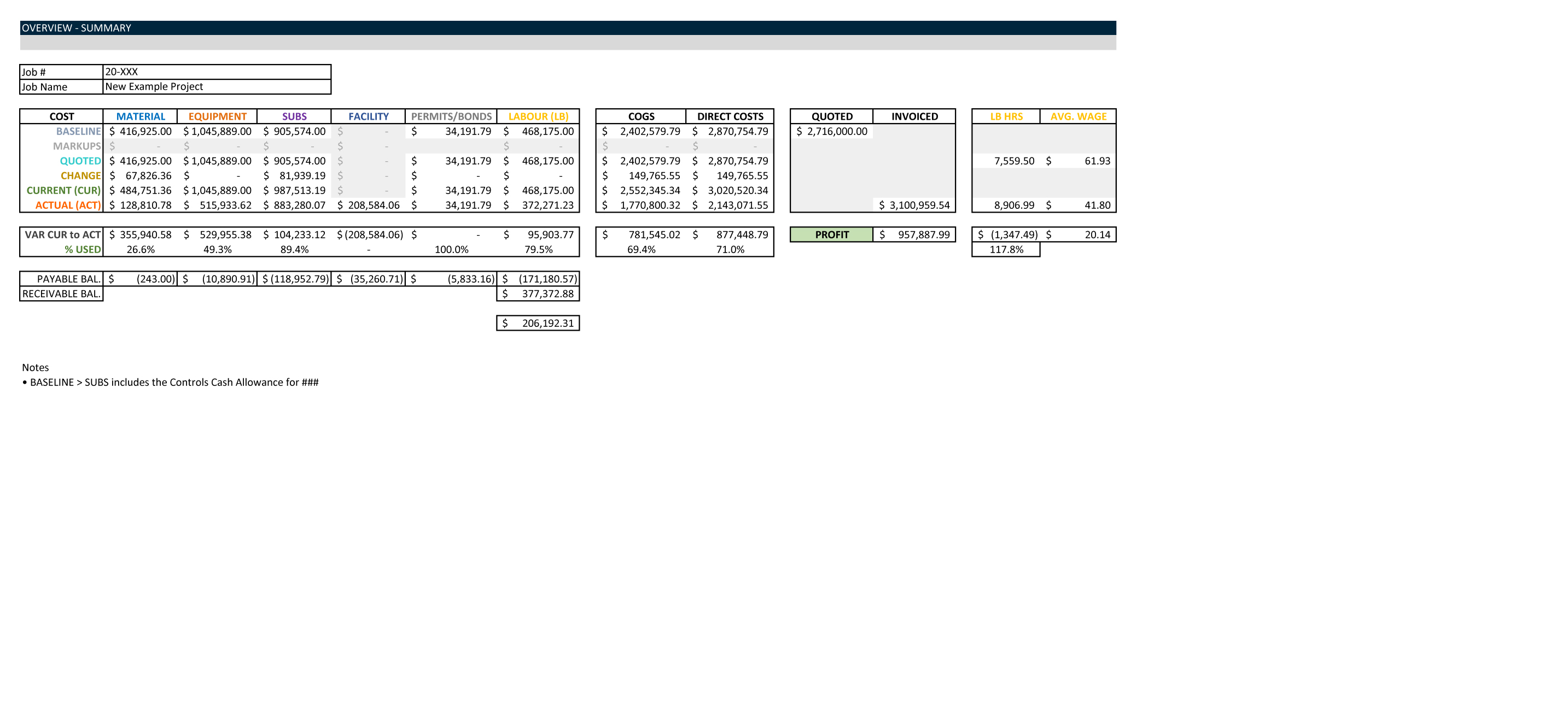
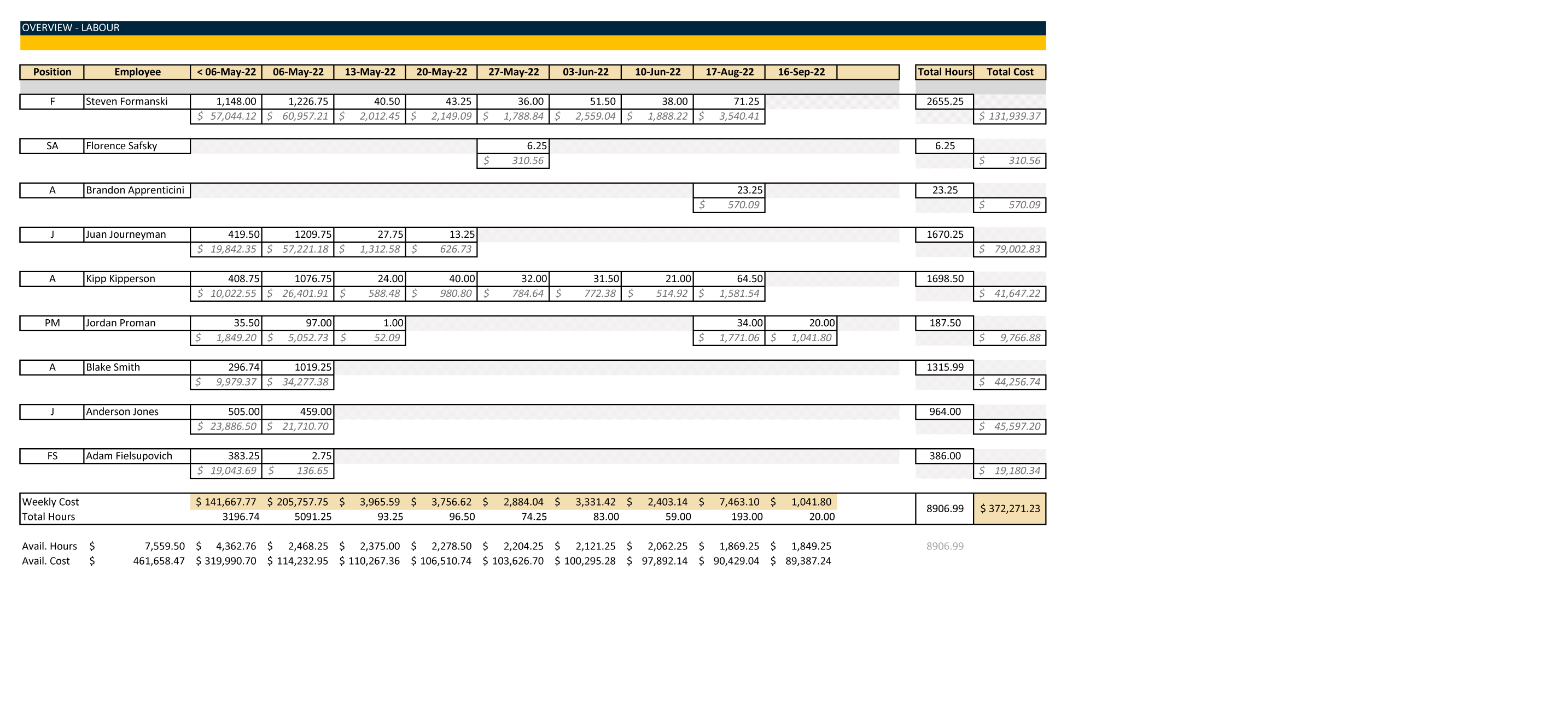
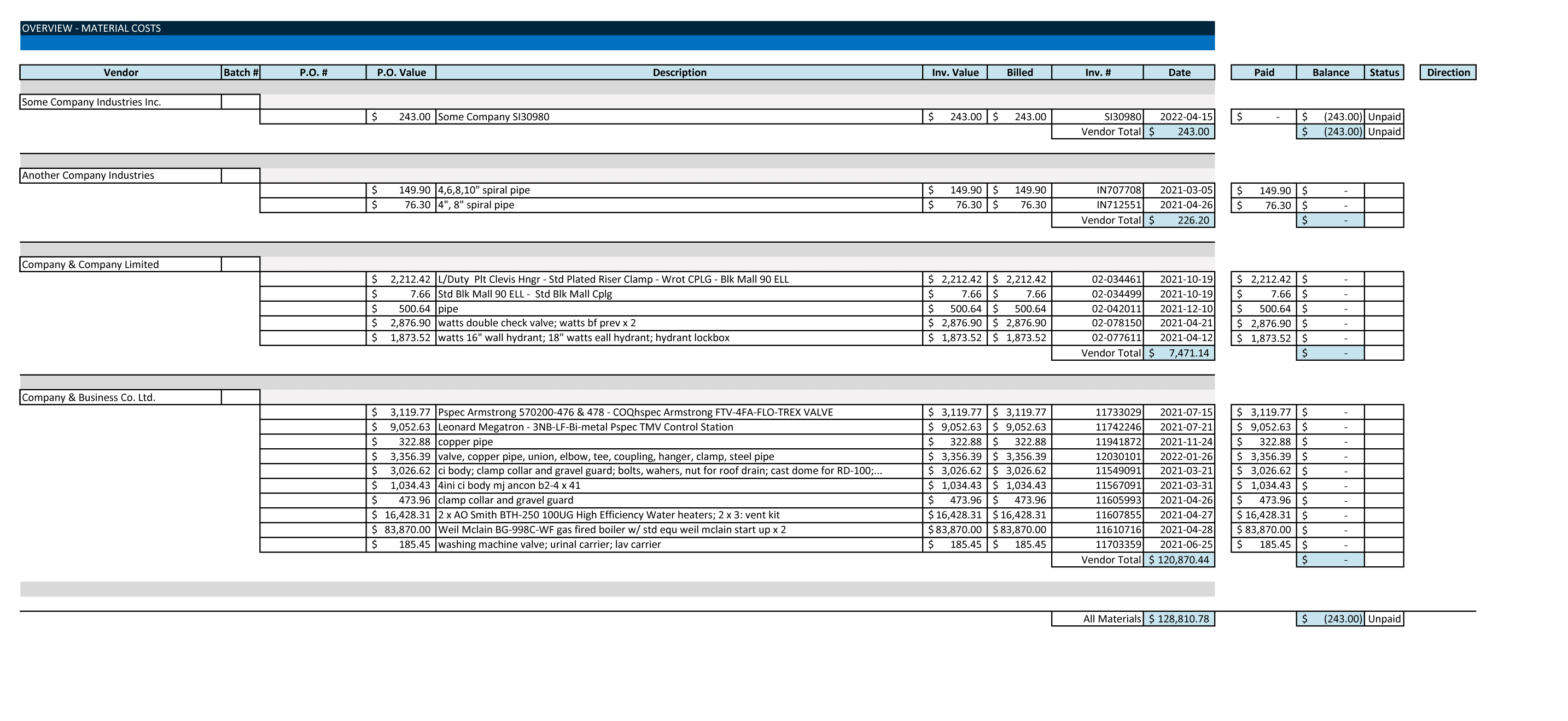
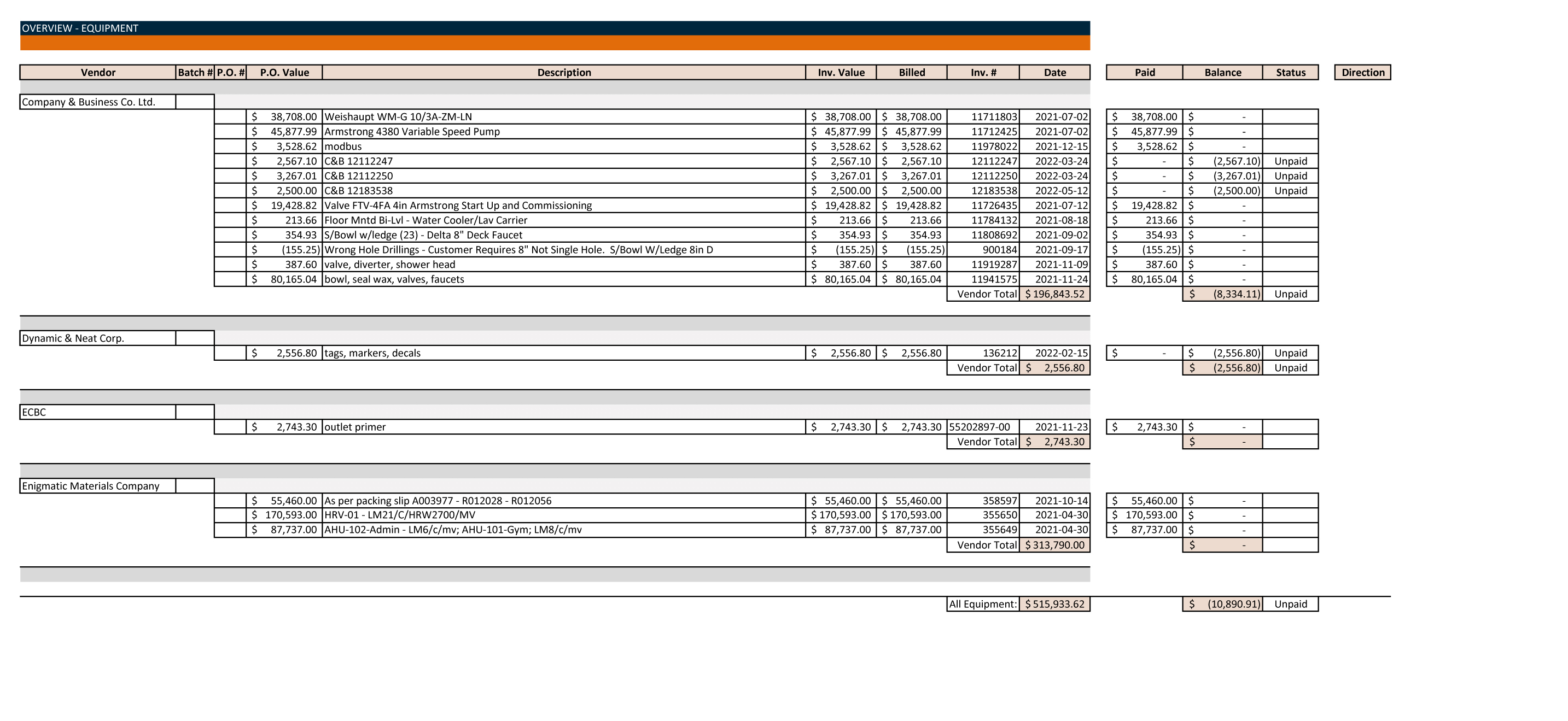
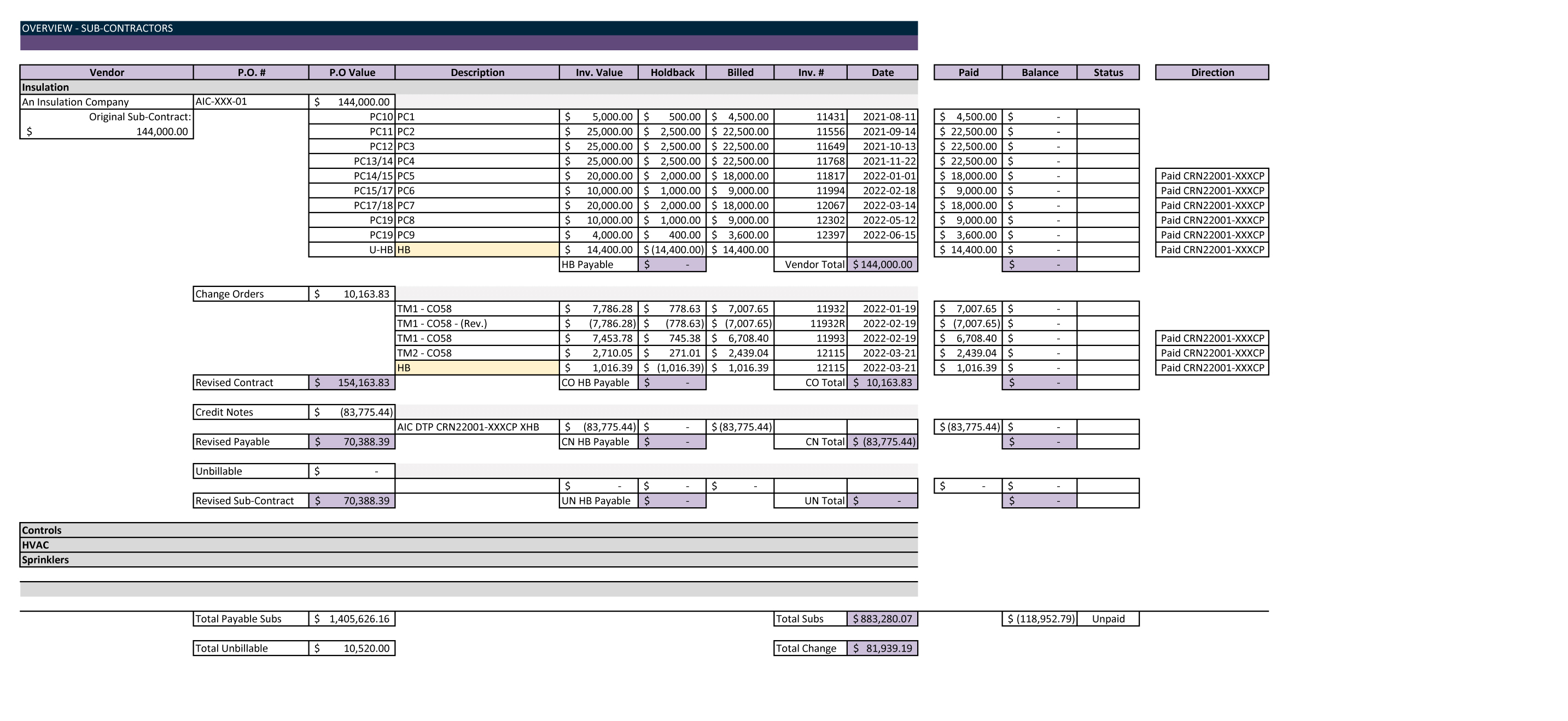
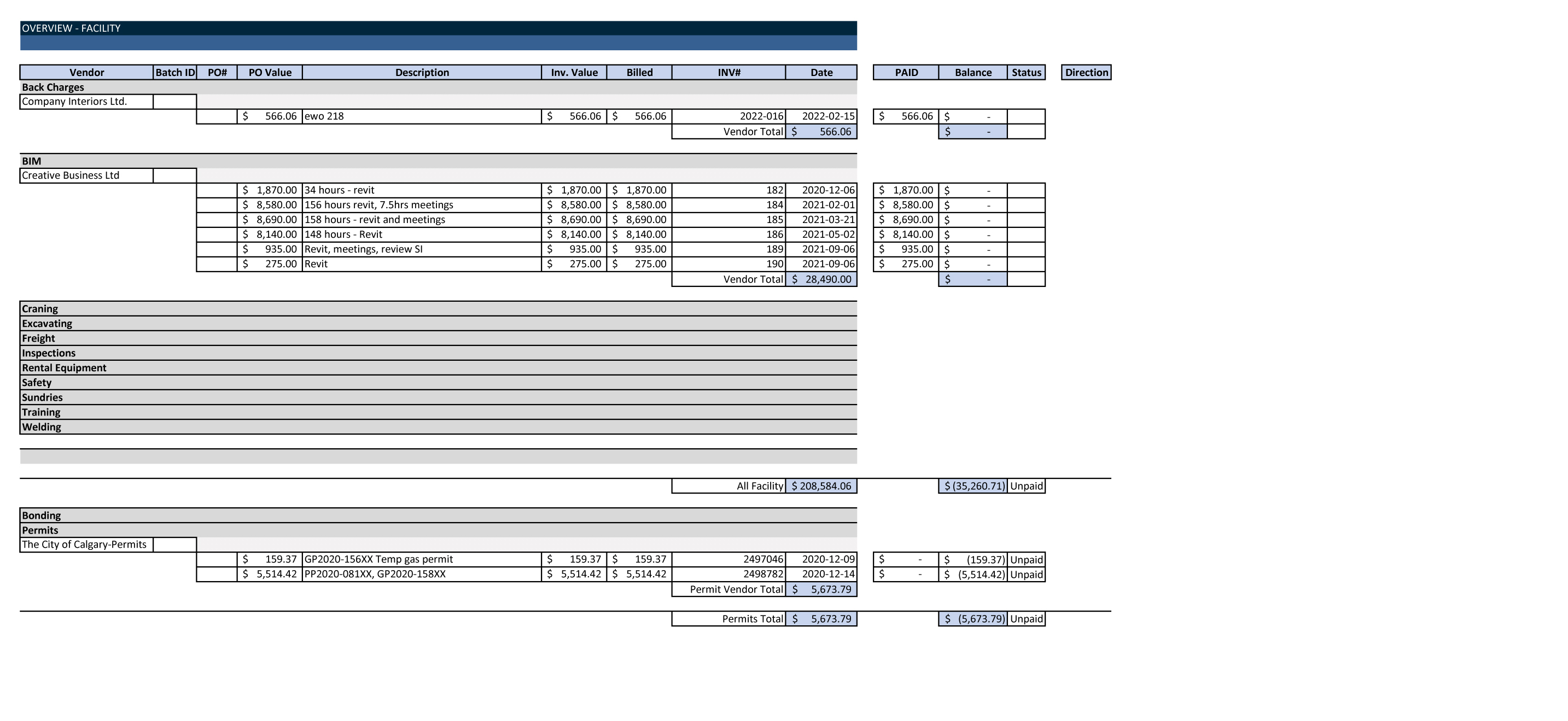
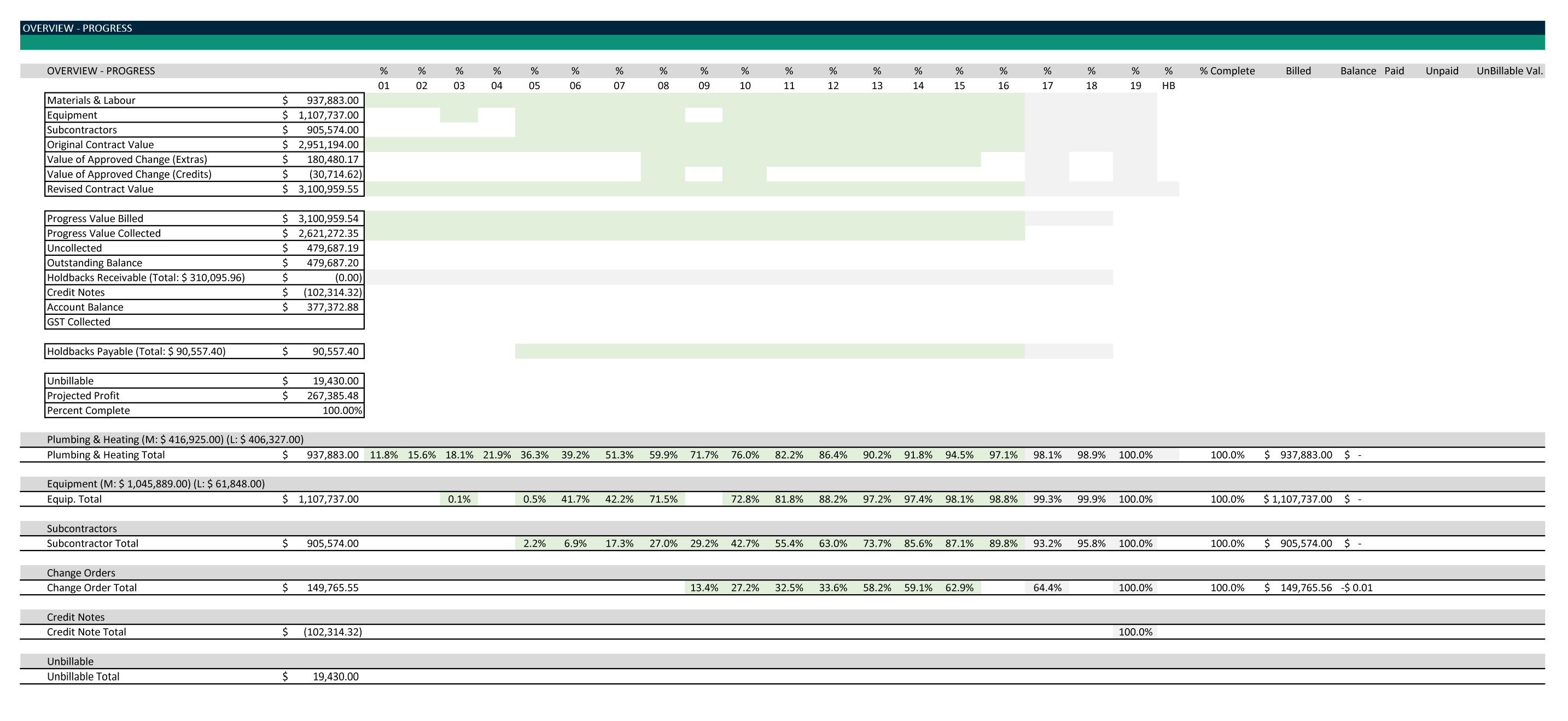
Jug created a revised project overview workbook that allowed project teams to hold their performance financially accountable, connecting the various project resources and allowing Unimech to reconcile the status of each of their projects.
It was developed in Microsoft Excel out of time constraints and user reliance.

Project Overview Workbook

Overview: Summary

Overview: Labour

OVERVIEW: MATERIALS

OVERVIEW: EQUIPMENT

OVERVIEW: SUB-CONTRACTORS

OVERVIEW: FACILITY

OVERVIEW: PROGRESS

A representation of the project overview workbook that Jug created for Unimech to reconcile and manage their projects resources, progress, and financials. You can switch between the pages by interacting with the tabs.

THE PROTOYTPE
Sadly, the uncovering of the bombshell changed the final scope of the project, resulting in Unimech being unable to realize their vision for a proprietary technology product; however, I've included it here in the following Figma flow for a glimpse of what might have been (or might still be in the future).

Prototype: Figma

A portion of Unimech's proprietary technology prototype created in Figma. Ideated as a responsive application, this prototype was only designed for larger tablet and screen formats.

These two products marked the final deliverables and completion of the project.

THE CONCLUSION

While the scope of this project was in constant flux and didn't allow for a "final" comprehensive product to be developed, Jug was able to create a myriad of solutions to validate and solve Unimech's complex problems. Ultimately, Jug was able to fulfill his initial project objective while successfully completing several other tasks under the expanding scope. He'd effectively created a comprehensive business, marketing, and brand strategy that could be used as an ongoing tool for growth, developed a system of operations and infrastructure that made communications coherent and actionable, and established a dominant brand presence that synergized the internal team and positively disrupted the industry.
Despite the decisions appearing premature, Jug's work prepared Unimech to become a multi-trade contractor and propel itself into the next market tier with confidence, clarity, and collaboration.

THE EVALUATION

If Jug could do this project again, there are a few things he would have done differently:
  1. He would have assumed more authority over his role sooner and validated his suspicions of the degree of negative impact the toxic staff were having. The process eventually revealed and removed those toxic staff components, but Jug feels Unimech would have significantly benefited by removing them immediately. A performance metric would have provided the necessary data to make the decision.

  2. Jug would have encouraged the client to accept detailed reports or postings in the USP on initiatives as key deliverables. This would have helped Unimech stay on task and assist in the current process rather than adding to the scope with new initiatives.
  3. Jug would have managed stakeholder ambitions by reframing the project scope. In retrospect, it's evident that the products required singular attention, not just as components of a larger product. More implementation analysis would have kept the ambitions focused and practical, while promoting more reserved growth decisions.

THE EXPERIENCE

Jug was grateful for this experience and became highly knowledgeable about another industry. He enjoyed interacting and building relationships with the wonderful personalities at Unimech and will continue to remember their time together with fondness.
He grew his skills in the following ways:
Programs
  • Adobe Illustrator
  • Adobe Photoshop
  • Adobe After Effects
  • Adobe Animate
  • Adobe XD
  • Microsoft Teams
  • Microsoft Excel
  • Microsoft Word
  • Microsoft PowerPoint
  • Microsoft SharePoint
  • WordPress
  • Joomla
  • Figma Design
  • Blender
  • HTML5/CSS3/JS/PHP
Skills
  • UI/UX Design
  • UX Research
  • Interaction Design
  • Visual Design
  • Marketing
  • Advertising
  • Branding
  • Web Design & Development
  • Business Development
  • Data Engineering
  • Team Management

THE RECOGNITION

No industry awards for this one. (I've heard you actually have to seek out those types of things—although, I've almost convinced Jeremy they're important). Still, the daily affirmations of Jeremy's work (by those most impacted by it) continue to provide a powerful personal recognition for him. True, it doesn't do much to promote him, but hopefully you can appreciate his work through your own appraisal.

Other Work

Dive into some of Jug’s other work below. Including a link to the archive section, where you’ll find a deck of more project cards for your crisp enjoyment.

Reach Out

Jug Studio is looking forward to hearing from you.

Contact Jug